Category: San Diego

Shirley Weber, California Secretary of State, Threatened by Trump’s DOJ with Criminal Charges if State Violates Federal Voting Requirements

 Source  July 20, 2026  1 Comment on Shirley Weber, California Secretary of State, Threatened by Trump’s DOJ with Criminal Charges if State Violates Federal Voting Requirements

By JW August / Special to OB Rag

San Diegan Shirley Weber, California’s Secretary of State, has received a warning from the U.S.Department of Justice, advising her that she or “any election officer” in California faces serious criminal charges for “knowingly retaining non-citizens on the Statewide Voter Registration List.”

The letter, sent July 7, was signed by Harmeet Dhillon, Assistant Attorney General of the Civil Rights  Division. At one time, she was one of the most influential  Republican women in California politics, and her stature has grown even more since following President Trump to Washington, where she is now a powerful voice in the party. Under her direction, the division, which 69 years ago was created to protect voting rights and to fight inequality, has changed course.

Before joining the administration, Dhillon was in private practice, and the firm she founded filed lawsuits in support of many of Trump’s goals.  This included a case in San Diego, where a Trump anti-vax supporter’s protests were gaining momentum.

Fast forward to the current Trump admiration and her role is again in support of conservative causes. In a recent Los Angeles Times article, a dozen former attorneys in the division said “the division has taken on a far more partisan approach.”

In the same story, Dhillon defended her work, stating that “the division’s actions aren’t political.”  She added her work isn’t combative; instead, “it’s transparent.”

Dhillon believes there is clear potential for non-citizens to vote in California elections. The letter to Weber comes amid increasing pressure by the Trump administration to discredit the nation’s voting systems, which the President says are inherently flawed.

Continue Reading Shirley Weber, California Secretary of State, Threatened by Trump’s DOJ with Criminal Charges if State Violates Federal Voting Requirements

Science Under the Sword of Damocles

 Source  July 20, 2026  6 Comments on Science Under the Sword of Damocles

By Sam Halpern, M.D.

I have spent my working life in medicine as a clinician and a medical scientist.  I have watched with awe as basic and applied medical science placed new and effective tools in the hands of physicians to diagnose and treat diseases that were once a death sentence.

The progress we have made in medical research has only been possible because the American people supported a commitment to long-term funding and scrupulous attention to awarding funds to research judged by the scientific community to be the most promising and well-conceived among competitive proposals.  Who a scientist voted for in an election, or whose political priorities they supported, never entered into the question of whether a grant proposal merited funding.

But on July 13, 2026, I was stunned to see a headline in the Los Angeles Times: “WARNING AGAINST POLITICS IN RESEARCH FUNDING,” by Corinne Purtill.

The article states that a new rule, proposed by the White House Office of Management and Budget, has the potential to overhaul the way federal grants are awarded and overseen. One scientific society has said that it would “all but end the use of scientific merit in the selection of grants and programs across the government.”

The new rule will give political appointees control over federal grants for scientific research, education and infrastructure and specifies that government funds can be spent only on projects “aligned with administration policies and priorities.” That shocked me! I had never heard of this proposal, and it has been around since May!

Continue Reading Science Under the Sword of Damocles

‘Mixed Results’ from Influx of Unprecedented Amounts of Cash in Primary for San Diego City Council

 Frank Gormlie  July 17, 2026  1 Comment on ‘Mixed Results’ from Influx of Unprecedented Amounts of Cash in Primary for San Diego City Council

David Garrick at the San Diego U-T wrote an analysis of the current City Council races on July 12th, and here is a summary of some of his findings.

First, they “attracted an unprecedented amount of cash this year from groups funded by labor unions, business interests and statewide organizations,” and he found “the results were decidedly mixed.”

For example, in the District 2 race, “A committee supporting Josh Coyne … spent $300,000, but Coyne didn’t come close to making the November runoff.” In contrast, “Richard Bailey finished first in District 2 thanks partly to more than $200,000 in committee support.”

Yet, candidate Rafael Perez in the District 8 race finished last despite $150,000 in committee support. One of the candidates who made the primary run-off was Gerardo Ramirez “after benefiting from more than $200,000 in committee support….”

Overall, the monies spent on these races “are dramatically higher than typical San Diego council race contributions from independent committees, which allow supporters to exceed the $800 maximum an individual can contribute directly to a campaign,” reports Garrick.

Continue Reading ‘Mixed Results’ from Influx of Unprecedented Amounts of Cash in Primary for San Diego City Council

Squatters Took Over Vacant Homes Owned by San Diego’s ‘King of ADUs’ and Brought Chaos and Crime to Encanto

 Source  July 17, 2026  2 Comments on Squatters Took Over Vacant Homes Owned by San Diego’s ‘King of ADUs’ and Brought Chaos and Crime to Encanto

By Dorian Hargrove and Andrew Keatts / Times of San Diego / July 16, 2026

A 40-yard green dumpster sits in front of 1461 Hilger in Encanto. Trash and debris tower over the railing. Less than 40 feet below sits a dilapidated wooden shed, or, as neighbors describe it, the makeshift garage where stolen cars are stored and disassembled throughout the night. The two-story house on the other side of the dumpster is littered with appliances and trash.

At least, that was the scene at the home until Wednesday morning, when the property owner, San Diego police and code enforcement officers executed a massive clean-up on the property two days after Times of San Diego asked for comment on the derelict property. Squatters had been living there and engaging in lawless behavior for nearly 8 months, neighbors say.

The home, and a neighboring property that was also occupied by squatters, are owned by a company formed by Christian Spicer, whose companies have been at the forefront of capitalizing on the city of San Diego’s accessory dwelling unit regulations, which are among the most permissive in all of California.

His companies have specialized in converting single-family properties into large apartment complexes, capitalizing on the city’s ADU rules. That includes the Chalcifica project in Pacific Beach, which would have turned two parcels into 136 units.

In an investor brochure for SDRE, Spicer’s company, before he rebranded it to Infill Innovation, the ADU developer promoted his plans to convert 53 single-family homes spread throughout San Diego into 1,178 total units.

The total cost to acquire the 53 properties, according to the brochure, was just under $62.8 million. If all of his projects were built according to plan, Spicer predicted revenue from adding the 1,100-plus ADUs would be more than $538.8 million, a 750 percent increase.

But Spicer’s plan hit snags. Residents in Encanto, Pacific Beach, and the College Area pushed back, delaying the projects from starting, and in some cases, such as the Chalcifica project in Pacific Beach, the projects wound up in court, where a judge temporarily halted the project from moving forward until a trial is held.

Continue Reading Squatters Took Over Vacant Homes Owned by San Diego’s ‘King of ADUs’ and Brought Chaos and Crime to Encanto

Pacific Beach: In the Beginning, There Were Trailer Parks

 Source  July 16, 2026  2 Comments on Pacific Beach: In the Beginning, There Were Trailer Parks

By Debbie Sklar / Beach & Bay Press / July 15, 2026

In 1941, Pacific Beach still looked like a place waiting for its future.

A photograph from that year — photographer unknown — captures a trailer camp set within the coastal landscape at a time when the neighborhood still held more open ground than development. It preserves a moment when San Diego’s shoreline suburbs were still evolving, long before postwar growth reshaped them into the communities known today.

By then, Pacific Beach had already been established, but it remained lightly developed. The coastal strip between La Jolla and Mission Beach had not yet filled in, and much of what is now dense residential and commercial space remained open or only lightly used.

The photograph captures that in-between stage. The trailer camp appears temporary by design — simple structures placed within a coastal landscape that had not yet taken its modern form. It sits in a version of Pacific Beach that feels familiar in geography but very different in scale and pace.

Trailer living during this period reflected a broader trend during that time across Southern California. Mobility, affordability, and seasonal work all helped shape small, temporary communities like this one. In coastal areas, trailer camps often appeared on open lots or undeveloped stretches near the ocean, where land had not yet been fully subdivided.

What makes the image stand out is not just what it shows, but what it doesn’t. There are no crowded streets, no busy commercial corridors, and no dense residential blocks pressing toward the shoreline. Instead, there is space — open land still waiting to be built.

That would change quickly after World War II.

Continue Reading Pacific Beach: In the Beginning, There Were Trailer Parks

When City Officials Stonewall the Public’s Information Requests, They Show Bad Faith; This Is Happening Now in Real Time re: San Diego’s Trash Fee

 Source  July 16, 2026  3 Comments on When City Officials Stonewall the Public’s Information Requests, They Show Bad Faith; This Is Happening Now in Real Time re: San Diego’s Trash Fee

By Paul Krueger

Bad government policies can have serious consequences. They can cost taxpayers money, and frustrate citizens who want access to public information that tells us why those policies failed and the price of those failures.

That’s happening now with the city of San Diego’s trash fee.

Instead of designing a budget for the new trash program that stayed within the estimated $29 monthly fee, a City Council majority last year added unnecessary new services and additional employees that increased the fee to $43.60.

Taxpayers revolted. Facing both a ballot measure and a lawsuit that could have invalidated any trash service fee, the council in May approved a compromise that significantly reduced both the fee and the scope of service.

But the road to compromise has been expensive. It required thousands of hours of staff time, and the legal settlement includes a $1 million payment to plaintiffs’ attorneys Mike Aguirre and Mia Severson.

Taxpayers will also shoulder the cost of an outside law firm that assisted the city attorney’s defense of that legal challenge.

Getting even basic information about those payments has been a frustrating exercise. Like too many other city officials, City Attorney Heather Ferbert routinely erects roadblocks to avoid disclosing public records that should be available for the asking.

Continue Reading When City Officials Stonewall the Public’s Information Requests, They Show Bad Faith; This Is Happening Now in Real Time re: San Diego’s Trash Fee

A civic partnership can provide the stewardship Mission Bay deserves

 Source  July 15, 2026  5 Comments on A civic partnership can provide the stewardship Mission Bay deserves

by Bradley A. Schnell / Beach & Bay Press / July 14, 2026, 10:00 a.m.

Thirteen public restrooms in Mission Bay Park are now closed. Last year the city tried to remove more than 180 fire rings. The Mission Beach Lifeguard Station deteriorated to the point that a structural evaluation called for its immediate closure. And across multiple parking lots, the city’s response to after-hours activity and maintenance challenges has been to install gates and impose timed overnight closures.

These unfortunate decisions are not isolated incidents. They are predictable results of a system that has lost the ability to deliver basic, consistent care for one of San Diego’s most important public assets.

Mission Bay Park was granted by the state of california as tidelands trust property and permanently dedicated as a public park for the benefit of all San Diegans over 80 years ago. It was conceived as a generational public asset — a place of open beaches, boating and shared enjoyment that would serve the region for decades to come.

As trustee of these tidelands, the city of San Diego carries a legal and fiduciary responsibility to maintain the park for public benefit. For most of its history the park largely fulfilled its promise, despite chronic underfunding. But it has never been as neglected as it is today.

Continue Reading A civic partnership can provide the stewardship Mission Bay deserves

Footnote 7: The Truth, the Corruption, the Timeline

 Source  July 13, 2026  32 Comments on Footnote 7: The Truth, the Corruption, the Timeline

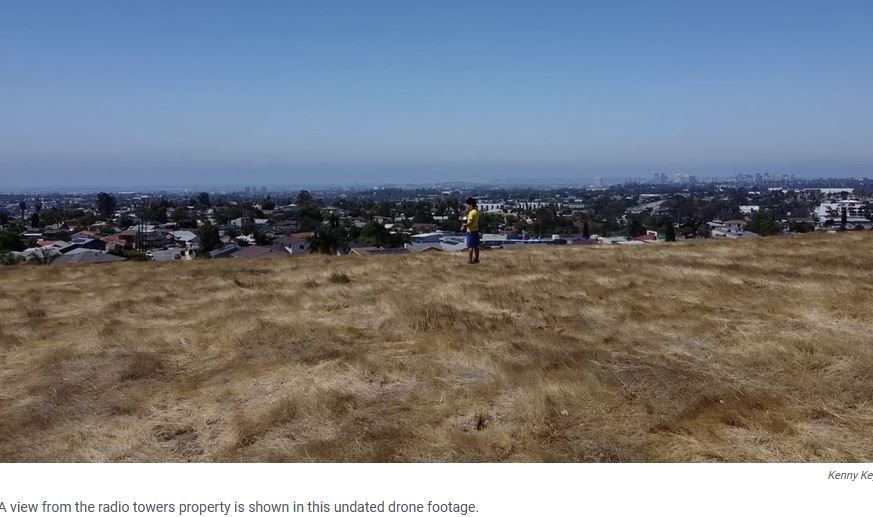
More on the Emerald Hills Radio Towers Project

By Robert Campbell

At the July 7th City Council hearing on the Emerald Hills Radio Towers project, Henry Foster’s Chief of Staff, Dan Horton entered his version of the Footnote 7 historical timeline into the record as “late arriving materials.” While his timeline begins on September 11, 2019, public records requests and review of City Council hearings have allowed me to plug the gaps and correct the record with missing facts.

The true written record starts on April 16, 2019, when Development Services Department (DSD) Assistant Director Gary Geiler wrote to land use attorney and developer Dennis Dawson, saying, “It was nice meeting with you to go over the potential development… I will continue to discuss with the Planning Department the feasibility of the Rezone on a neighborhood basis… given the current density restrictions.”

The following narrative is fully documented and supported by public records requests, public archives, and verified audio and video recordings.

April – May 2019

Internal Reality: DSD Assistant Director Geiler meets privately with developer attorney Dennis Dawson. They discuss “potential development” and “rezone feasibility” for a “Broadway Site” under current density restrictions. Geiler provides Dawson with municipal codes for RS (Residential-Single) zones and Planned Development Permits to map out a strategy.

Continue Reading Footnote 7: The Truth, the Corruption, the Timeline

Linda Vista: The Wartime Neighborhood That Helped Build Modern San Diego

 Source  July 13, 2026  1 Comment on Linda Vista: The Wartime Neighborhood That Helped Build Modern San Diego

By Debbie L. Sklar / Special to the OB Rag

Linda Vista may not always be the first San Diego neighborhood that comes to mind when people think about local history, but its story is deeply connected to the growth and transformation of the city itself.

Located on a mesa overlooking Mission Valley, the neighborhood was born out of necessity during World War II, when San Diego was rapidly becoming one of the nation’s most important defense and aviation centers.

What began as a federal housing project for wartime workers eventually grew into a diverse community with its own identity, traditions, and history.
The name Linda Vista, which means “pretty view” in Spanish, dates back to the late 1800s. But the Linda Vista we know today began taking shape in 1941, when the federal government purchased land to build housing for thousands of workers arriving in San Diego to support the war effort.

At the time, companies such as Consolidated Aircraft were expanding rapidly, producing aircraft needed by the military. Workers poured into the city, creating an urgent need for housing. The answer was Linda Vista, one of the largest wartime housing projects in the United States.

Continue Reading Linda Vista: The Wartime Neighborhood That Helped Build Modern San Diego

California Cannabis Queen in Trouble With the Feds

 Source  July 13, 2026  2 Comments on California Cannabis Queen in Trouble With the Feds

By JW August

Laurie Holcomb, founder of a multiple cannabis companies, has made serious errors in judgment, alleges the U.S.Attorney’s Office in San Diego. The government announced last week it had filed a false claims act complaint against her, claiming that she had illegally obtained five pandemic loans from the federal government.

Her companies were engaged in the “cultivation, distribution, and retail sale of recreational cannabis and cannabis products,” according to the government’s filing.  As is commonly known, it’s legal to plant, cultivate and smoke marijuana in California if you play by its rules.  Not so with the federal government if it’s sold for recreational use, it’s still considered highly restricted Schedule I drug.

Holcomb’s mistake, the U.S. Attorney alleges, was when she asked the government for money. It was during the pandemic times and she borrowed from the Paycheck Protection Program, or PPP, which was created to help businesses during the pandemic.  She  convinced the government to give her $1.4 million.

Holcolm’s company claims to have generated $100 million in annual sales of cannabis, according to various media reports. The company also has a 100,000 square-foot cultivation campus in Los Angeles.

The company is described in the media reports as one of the leading legal cannabis companies in the state, having distributed marijuana all over California, including numerous locations in San Diego. Debts and merger decisions forced her to file for bankruptcy protection in March of last year.

Continue Reading California Cannabis Queen in Trouble With the Feds

San Diego Community Coalition Bulletin: This Week at City Hall — July 13–17, 2026

 Staff  July 13, 2026  4 Comments on San Diego Community Coalition Bulletin: This Week at City Hall — July 13–17, 2026

Monday & Tuesday: Last Chance to Speak Out Against Mission Bay Bathroom Closures
The San Diego Community Coalition publishes this email bulletin to keep our members and the general public informed about important Council hearings and other city public meetings.

Tuesday, July 13: City Council, 10:00 a.m.

Agenda:

Item 52: Sixth Amendment to Increase Expenditure Authority for the Procurement Contract Between the City of San Diego and Rehrig Pacific Company for Waste Carts, Recycling Cars, Cart Parts, Bins and Related Products

Why it matters: This consent item reveals that the City’s haphazard effort to close its budget gap by charging for trash collection has so far cost a whopping $106,526,000. That expenditure is roughly *200* times the $546,000 the city will save by closing 13 (nearly half) of the 28 bathrooms at Mission Bay.

Speaking of which…

Last Chance to Speak Out Against “Petty Assault” of Mission Bay Bathroom Closures

Continue Reading San Diego Community Coalition Bulletin: This Week at City Hall — July 13–17, 2026

The Absurdity of ‘Exclusionary Zoning’ in Emerald Hills

 Source  July 11, 2026  19 Comments on The Absurdity of ‘Exclusionary Zoning’ in Emerald Hills

By Robert Campbell

On Tuesday, July 7th, we saw something spectacular. Councilmember Henry Foster III and County Supervisor Monica Montgomery Steppe’s defense of the Emerald Hills “Radio Towers” development which relied heavily on a well-substantiated historical truth: that large lot zoning was historically used as an exclusionary tool to keep minorities out of wealthy, white neighborhoods. But applying that historical framework to the Radio Towers project is a profound misdirection.

Their impassioned argument has left the community deeply puzzled, not because the history is wrong, but because the application of it in this instance is completely inverted.

Selective Application of Housing Density

The claim that dismantling large-lot restrictions is an act of racial and economic equity will leave you scratching your head when looking at a map of San Diego. The policy enacted here, Footnote 7, was a direct shot at Emerald Hills and Encanto, historically minority-majority neighborhoods. If the goal truly were to use smaller lot sizes to desegregate and dismantle historical exclusion, that policy would be aggressively targeted at the predominantly white, high-resource neighborhoods that actually practiced that exclusion. Instead, those wealthy neighborhoods in San Diego remain entirely intact and protected with their large lots, while two minority-majority neighborhoods are now forced to absorb density and lose their remaining open space to this density that white neighborhoods are not required to do.

Continue Reading The Absurdity of ‘Exclusionary Zoning’ in Emerald Hills