

Could October 2026 Be the Last Month of American Democracy?
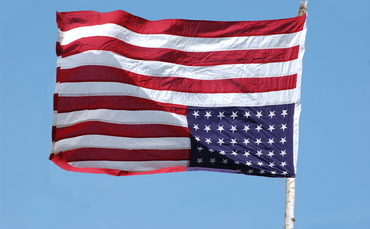 We’re asking this outrageous question: could this month — October of 2026 — actually be the very last month of American democracy?
This is preposterous! How hyperbolic you yell back! What are you thinking!?
How could any intelligent American in our present day country even consider that after 250 years of democracy this particular month is the last one? This headline is just click-bait and whatever follows is really not worthy of my time and energy to even consider.
Um, okay. If you’re still here, perhaps curiosity has forced you to remain. Or maybe you are looking for a laugh, or another example of TDS — Trump Derangement Syndrome.
Yet, there is a growing gnawing in your conscience. You have enough of an understanding of what’s going on in America to know that this is not normal, this whole Trump affair has taken all of us down a dark tunnel and maybe, just maybe there is a kernel of truth in this question — whether this Halloween month is our last one where democracy still exists. And whether it will still exist after the dust and dirt from the mid-terms settle. Can we even consider what this means?
How could a country with such an experiment in democracy begun by our founding fathers and mothers a quarter of a millennium ago — bogged down with slavery and the mass extinction of native peoples — tested by our bloodiest war ever, the Civil War, tossed about by world wars and the wars of imperialism, by recessions and depressions, floods, earthquakes and wildfires, now still standing by all the reforms of the 20th century, be currently and fatally challenged by the worst and most corrupt and authoritarian president in our history?
How could we be in this place? How could this have happened despite all of our better angels guiding us out of the promise and morass of our history?
But that’s the whole point! This is where we’re at.
Due to all the threats and actions taken by Trump and all his allies they have brought us here.
And just where is that exactly?
We’re on the precipice of the one of the most dangerous moments in modern American history.
 By Nicholas Riccardi and Matt Brown
 By Michael Hernandez
 by Ernie McCray
 By Frank Gormlie
 by David Smollar /
  By Angelo Haynes
 By Brad Reed /
  by Roberto Camacho /
  In the fall of 1964, over 60 years ago, the young students on the campus of the University of California, Berkeley found themselves in an untenable situation. Campus activists had set up information tables in Sproul Plaza on campus and had solicited donations for causes connected to the Civil Rights Movement. Some of them had traveled with the Freedom Riders and had worked to register African American voters in Mississippi that previous summer. At the time, however, existing rules for fundraising for political parties was limited exclusively to the Democratic and Republican school clubs.
 Editordude: Many Americans have been affected by the mainstream media blackout of this and have been unaware of the humanitarian flotilla that was bound for Gaza. In contrast, people in Europe are totally aware of it and are protesting the Israeli military’s interceptions.
  By Ezra Klein / New York Times –




Recent Comments