

The Rise of Roadside Motor Lodges in San Diego
 Debbie L Sklar / Times of San Diego / Sept. 18, 2026
A motorist traveling through San Diego in the 1930s didn’t need a large hotel to spend the night. Small tourist courts offered a room, a parking space, and a convenient stop along the road.
The tourist court emerged as automobile travel became more common. By the 1930s, Americans increasingly needed lodging that accommodated both themselves and their cars, and San Diego’s major automobile routes became natural locations for this new kind of business.
The city of San Diego identifies the tourist court — also called an auto camp or auto court — as the predecessor of the modern motel. Early courts generally consisted of small, one-story buildings with a limited number of rooms and nearby parking, or individual cabins arranged around a central parking area.
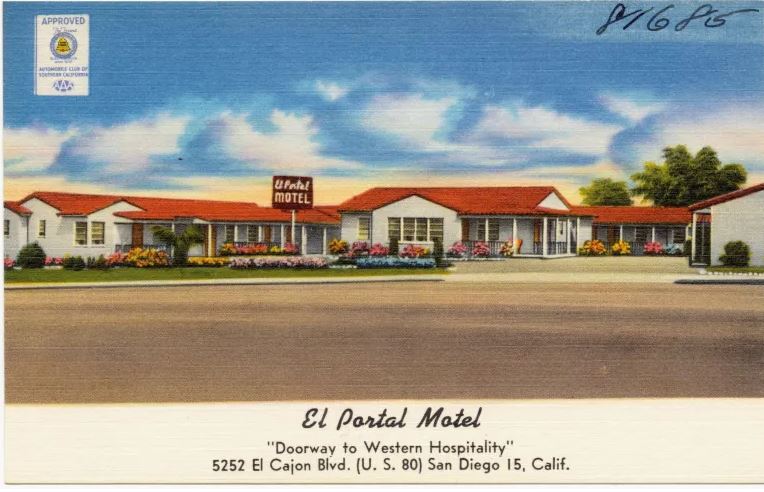
One example was the El Portal Motel and Apartments at 5252 El Cajon Boulevard, along Business Route U.S. 80. A vintage postcard advertised the property as “Doorway to Western Hospitality” and described it as a 54-unit motel and apartment complex with kitchens, a heated pool, and other amenities.


 By Michael J. Stepner & Mary Lydon /
 A 23-year-old man died at the hospital after his motorcycle crashed into an SUV in the Sunset Cliffs area of Point Loma Wednesday afternoon, Sept. 16.


 OB Historical Society Presents
 By Angelo Haynes
 By Debbie L. Sklar / Special to the OB Rag
 By Robert Burns
 U.S. Military and Defense Dept. Have Hidden Extent of Damage to Aircraft, Buildings and Vehicles


 OB Community Development Corporation Launches “Better OB Contest,” Calling on Residents to Share Vision for the Neighborhood
 Rag’s Editordude One of Several Chosen by Save Our Heritage Organization




Recent Comments