Category: San Diego

Midway Rising or Midway Sinking?

 Source  August 10, 2026  8 Comments on Midway Rising or Midway Sinking?

By Lynne Miller

PREFACE: In 2023/24 a small article was posted in the OB Rag by the editordude, Frank.  It alerted my neighbors that 4705 Pt.Loma Ave was moving forward with building plans.  Without the OB RAG, the city would have built the project, unchallenged.  The City was using the ministerial law embedded in Complete Communities, that does NOT require public notification.

Thanks to the Rag and its years of sleuthing, neighbors found out, fought the project and won. The only way to beat the City corruption which smells like the wetlands in Imperial Beach, is to unite, and take action. Since 2023 many organizations have started individual battles against the unhinged power of the City and State. In order to defeat the billionaire driven machine of builders and government collusion we must unite!

The title of this article is not intended to be just cute, it is based on a scientific reality about the Midway land.

Saturday, I attended a meeting held by SDUC (San Diego United Communities.  Their website is sandiegounitiedcommunities.com.

This is one of several groups who are fighting for the Finest City.  It is worth the fight, and it will take you, your friends, and their friends to unite in the common and urgent cause, Save San Diego.

Continue Reading Midway Rising or Midway Sinking?

Point Loma Lighthouse: The families who kept San Diego’s first beacon burning bright

 Source  August 10, 2026  1 Comment on Point Loma Lighthouse: The families who kept San Diego’s first beacon burning bright

By Debbie Sklar / Peninsula Beacon / August 6, 2026

High atop Point Loma, overlooking the entrance to San Diego Bay, families once lived in one of the most isolated homes in Southern California. Their job was simple in theory but demanding in practice: keep the lighthouse burning every night so ships could safely find their way into the harbor.

Completed in 1855, the Old Point Loma Lighthouse was one of the first lighthouses built on the California coast after California became a state. Standing 422 feet above sea level inside what is now Cabrillo National Monument, it was built at what was then considered the highest lighthouse location in the United States.

The lofty location offered spectacular views, but it eventually created an unexpected problem.

Life at the lighthouse was far from easy.

The station was an isolated outpost where keepers and their families contended with strong winds, scarce supplies and the constant responsibility of maintaining the beacon. The grounds included living quarters, a barn, storage buildings, a chicken coop and water cisterns. Without running water, every drop had to be collected and carefully conserved.

Continue Reading Point Loma Lighthouse: The families who kept San Diego’s first beacon burning bright

2 Recent Reports on San Diego’s Bicycle Network Find Dangerous and Clogged Lanes, Key Gaps and Inadequate School Routes

 Frank Gormlie  August 7, 2026  9 Comments on 2 Recent Reports on San Diego’s Bicycle Network Find Dangerous and Clogged Lanes, Key Gaps and Inadequate School Routes

Two recent reports out on San Diego’s bicycle network find troubling problems with the hundreds of miles of bike lanes, from difficult and dangerous corridors, gaps in the infrastructure and insufficient bike routes for school kids.

One report from San Diego State University — the “State of the Ride”– published in May, ” identifies corridors for improvement and highlights how biking could feel safer for more communities, as UT writer Maura Fox reported August 5. She wrote that “San Diego’s expansive bicycle network remains difficult and sometimes dangerous for cyclists to navigate and contains key gaps that prevent continuous riding.”

The report was done in conjunction with the group BikeSD, whose executive director quipped:

“It’s not the question of, how many miles did we build? It’s more like, can an average child or a 70-year-old woman actually ride there?”

The report highlighted these issues, looking at what it says is the nearly 700 miles of bike facilities :

  • Only about 75% of the 2013 bike master plan’s goal for bike infrastructure has been implemented;
  • The most common type of facility — which accounts for nearly 60% of the mileage — are class II bike lanes, which are designated specifically for cyclists.
  • bike infrastructure is not distributed evenly across the city.
Continue Reading 2 Recent Reports on San Diego’s Bicycle Network Find Dangerous and Clogged Lanes, Key Gaps and Inadequate School Routes

When Old Town Was the Heart of San Diego

 Source  August 7, 2026  1 Comment on When Old Town Was the Heart of San Diego

by Debbie L. Sklar / Times of San Diego / July 29, 2026

Visitors walking through Old Town San Diego today see adobe buildings, historic plazas, museums, restaurants and shops celebrating the city’s earliest chapters.

But one of the most surprising facts about Old Town is that San Diego’s first major settlement and early city center was eventually the part of the city that people left behind.

Before downtown San Diego’s skyline, before the waterfront became the region’s commercial center and before the city expanded into a modern metropolis, Old Town was where much of San Diego’s early history unfolded.

Heart of the community
Following the establishment of the Spanish presidio and Mission San Diego de Alcalá in 1769, the area around the presidio developed into the region’s first major civilian settlement. During the Mexican period and the early years of American rule, it served as San Diego’s civic, commercial, and social center.

Continue Reading When Old Town Was the Heart of San Diego

Why SeaWorld Replaced Fireworks With Drone Shows: The Settlement and the Precedent

 Source  August 7, 2026  1 Comment on Why SeaWorld Replaced Fireworks With Drone Shows: The Settlement and the Precedent

By Philip Hernandez / Seasonal Entertainment / July 31, 2026

SeaWorld San Diego has no fireworks scheduled on any night in 2026. The park’s nighttime calendar now runs on the 600-drone Ocean of Dreams show …, a change that comes out of a Clean Water Act lawsuit: SeaWorld sought the drone pilot while the case was pending, and the settlement signed in May requires it to pursue drones as a permanent replacement for fireworks. Last summer’s Enchanted Wonders was the final fireworks season, closing a run local reporting puts at nearly six decades.

(Please go to the original for all the great links)

What the Settlement Requires
San Diego Coastkeeper and the Coastal Environmental Rights Foundation (CERF) sued SeaWorld in March 2025 over repeated noncompliance with the park’s Clean Water Act fireworks permit, documenting plastic, foil, sharp wiring, and toxic metal residues recovered from Fiesta Island and the Mission Bay seabed. The settlement, announced May 20, 2026, requires SeaWorld to pursue drones as a permanent replacement for fireworks in good faith and to run more robust pollution prevention and cleanup for any fireworks it still shoots.

Continue Reading Why SeaWorld Replaced Fireworks With Drone Shows: The Settlement and the Precedent

Why Even (Really) Big Money Couldn’t Save Josh Coyne

 Source  August 6, 2026  26 Comments on Why Even (Really) Big Money Couldn’t Save Josh Coyne

Council Candidate Went Down to Defeat Because He Was Out-of-Touch With District 2 Voters Despite Spending $80 Per Vote

By Paul Krueger / Special to OB Rag

Josh Coyne and his supporters raised more than $450,000 in his run for the San Diego District 2 City Council seat.

That money was not well spent.

Coyne finished a very distant third in the June primary, with just 5,622 votes. First place finisher Richard Bailey got 14,800 votes; Nicole Crosby was second with 14,325.

Bailey is a Republican-turned-Independent who raised and spent less than Coyne. He was also the target of $148,000 in negative ads sponsored by labor unions. But the former Coronado mayor still beat Coyne by more than 9,000 votes.

Democrat Crosby’s cost-per-vote total was even more impressive. She and her supporters raised $153,000 — one-third of Coyne’s war chest — but she beat him by almost 9,000 votes.

The starkest comparison is Coyne versus fourth-place finisher Mandy Havik, who raised just $45,000, or one-tenth of the money raised and spent on Coyne’s behalf.

Havlik is a long-time Democrat stalwart and beach-area activist who campaigned on limiting ADU and highrise development and empowering neighborhood planning groups. She captured 4,750 votes, at about $10 per vote, compared to Coyne’s $80 per vote.

Continue Reading Why Even (Really) Big Money Couldn’t Save Josh Coyne

The Resistance Against Flock Surveillance Cameras

 Staff  August 6, 2026  16 Comments on The Resistance Against Flock Surveillance Cameras

By Michael Hernandez

You probably know there are programs out there intercepting electronic data to harvest global emails, chats, and browsing histories. And there are governments and agencies collecting our metadata for information including the durations of our calls, communication time stamps, and precise geolocation records. There are facial recognition networks scanning anyone and everyone in public spaces, transit hubs, and protests to match faces against immense biometric databases.

In our world — one that is increasingly resembling the totalitarian superstate of Oceania in George Orwell’s 1984 — these are just a few of the tools being used in the modern day to spy on everyday Americans. Among them in the mass-surveillance toolbox are Automatic License Plate Readers, or ALPRs. ALPRs are cameras set up along roadways, traffic lights, or mounted on police cars that capture images of license plates in real-time, convert them into text and run the images against vehicle databases to find a match.

One of the major providers of ALPR technology is Flock Safety, an American public safety tech and private-police surveillance company.

Founded in 2017 by three alumni from the Georgia Institute of Technology with a stated mission of “shaping the future of safety”, Flock began as a side-project which saw the three co-founders build their first video surveillance cameras by hand around one of the trio’s dining room tables. The trio allegedly began to focus on the project after a Dekalb County detective told one of them their product had assisted police in solving a home break-in. Then that member supposedly called the other two co-founders and told them it was time to quit their jobs.

As of 2026 Flock Safety ALPRs are reportedly being used by over 5,000 law enforcement agencies in 6,000 communities across the U.S. It is estimated flock safety cameras scan more than 20 billion cars nationwide every month. According to Flock itself, roughly 10 percent of reported crimes in the country are solved using their technology, amounting to more than  a purported 700,000 crimes a year.

Flock Safety’s network is made up of cameras, image recognition, and AI machine learning which then shares information with police departments. While advocates tout the technology as an important tool for law enforcement, ALPRs have drawn a heavy amount of backlash from the public, elected officials, and civil liberty groups citing privacy concerns.

Continue Reading The Resistance Against Flock Surveillance Cameras

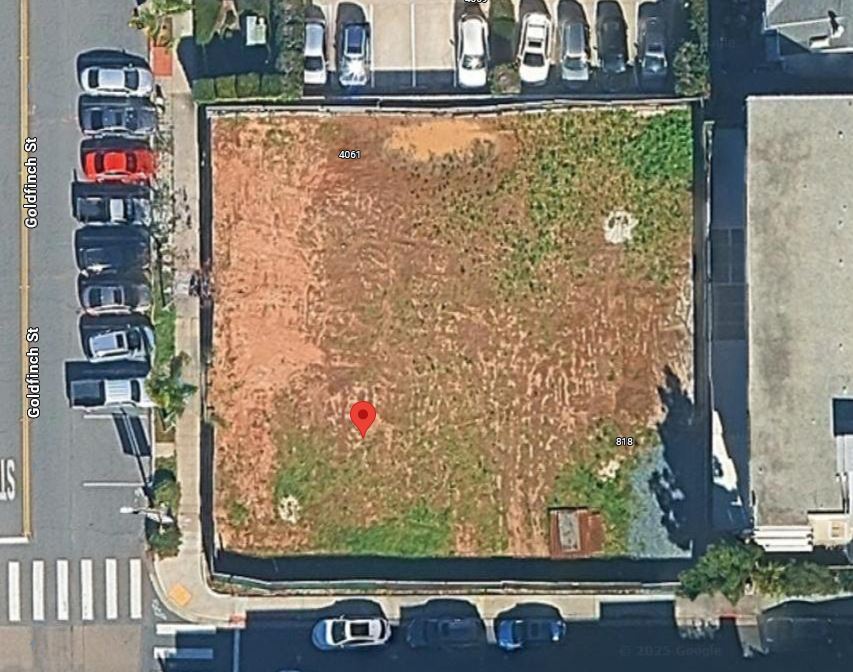
Concerns Mount with Midway Rising and NAVWAR Redevelopments: Additional 50K Residents, Building 25-Story Buildings on Former Swampland

 Source  August 6, 2026  2 Comments on Concerns Mount with Midway Rising and NAVWAR Redevelopments: Additional 50K Residents, Building 25-Story Buildings on Former Swampland

by: Dan Plante / Fox5SanDiego / Aug 5, 2026

If the city of San Diego and their chosen developer have their way, the old Midway District will be transformed into a shiny new village with 25-story apartment buildings and dozens of new businesses.

No one is arguing that the area needs a serious facelift.

But from the beginning, the city and the developers have at times seemed to sidestep the environmental impacts and the voice of the people.

“We are here today to say we are not backing down. We’re here today to tell San Diego what’s really happening in our city”, says Patty Ducey-Brooks of the Old Town Planning Board.

In this case, what’s happening is a potential building boom. Not only Midway Rising, with proposed 25-story apartment towers in a 30-foot height limit zone.

But down the street at the old Naval Warfare building, plans are underway to build a row of 30-story apartment buildings.

Both projects would be exempt from the California Environmental Quality Act if state lawmakers approve SB 958.

“We’re talking about the potential for 50,000 new people in less than one square mile. That would double the population of Point Loma and add approximately 20,000 new cars to the road”, says Eric Law of the Peninsula Planning Board in Point Loma.

Continue Reading Concerns Mount with Midway Rising and NAVWAR Redevelopments: Additional 50K Residents, Building 25-Story Buildings on Former Swampland

Less People Getting Food Stamps, More People Getting in Food Lines

 Source  August 5, 2026  0 Comments on Less People Getting Food Stamps, More People Getting in Food Lines

‘We haven’t seen anything like this for 30 years.’

by Jake Kincaid / inewsource / August 2, 2026

Why this matters: The number of San Diego County residents using food stamps has plummeted. Experts say new rules and longstanding fears are behind the decline.

A line of umbrellas stretched around the corner and down the street as dozens of people sheltered themselves from the baking sun while they waited for cardboard boxes full of fresh produce and protein at a San Diego Food Bank distribution in San Ysidro Tuesday.

“The lines are getting longer,” Maria Lewis said. “People are worried now.”

Lewis, an outreach coordinator, walked up and down the line, trying to sign people up for the federal aid program known as food stamps, called CalFresh in California. Some were reluctant.

People in need have been pushed increasingly into food lines and away from federal aid by a combination of new policies limiting program eligibility, increasingly difficult and frequent applications to receive benefits and rising fears that the government will use identifying data to deport people getting food stamps or to take away their permanent resident status.

The changes to the program are part of President Donald Trump’s signature spending bill, which he signed into law a year ago, to help eliminate fraud, abuse and waste in the program.

The bill also cut off benefits to some immigrants such as asylum seekers, human trafficking victims and refugees starting in April in California. In June, people were given three months to meet new work requirements.

The new eligibility requirements have been hitting states at different times. They took effect in California in April and June, but there has seen a steady drop in participation for the past year.

Continue Reading Less People Getting Food Stamps, More People Getting in Food Lines

Port’s Own EIR on TopGolf at Harbor Island Raises Substantive Concerns Over Its Negative Impacts on Environment

 Source  August 5, 2026  2 Comments on Port’s Own EIR on TopGolf at Harbor Island Raises Substantive Concerns Over Its Negative Impacts on Environment

Public Comment on This Use of Public Land Closes After August 24

by Andi Ruiz / Times of San Diego / Aug. 4, 2026

Lights, poles and nets at a proposed waterfront golf and entertainment center could have a negative impact on habitats and native species, according to an environmental analysis of the project.

The concerns are addressed in a draft environmental impact report (EIR) on the redevelopment of East Harbor Island being sought by the Port of San Diego, which would include a Topgolf complex and waterfront park, each covering about 10 acres.

The report cites light pollution and height of the Topgolf poles and nets as notable impacts.

Bright light, according to the analysis, could disrupt the behavior of birds and attract them to nets in the structure, leaving them entangled.

A proposed alternative would limit the Topgolf to one story, as compared to the currently proposed three stories. The planned 108 hitting bays would drop to 34 and the height of the netting poles would fall from 170 feet to 140 feet with the shift to a one-story structure.

Continue Reading Port’s Own EIR on TopGolf at Harbor Island Raises Substantive Concerns Over Its Negative Impacts on Environment

UC San Diego Is Cutting Ties to the Border Patrol After Student Outcry

 Source  August 5, 2026  0 Comments on UC San Diego Is Cutting Ties to the Border Patrol After Student Outcry

by Phoebe Huss / Cal-Matters /  July 31, 2026

Summary: Following a CalMatters investigation, students and faculty at UC San Diego protested against campus police for collaborating with Border Patrol through a federal grant program. The university will stop participating in the program and aiding patrols, sources and internal documents confirm.

A California public university cut ties with a federal program that paid for campus police to aid Border Patrol, within weeks of CalMatters revealing the decade-long partnership.

Operation Stonegarden, a grant managed by the Department of Homeland Security, allocates an average of $11 million each year for California law enforcement agencies to work with U.S. Customs and Border Protection and its subagency Border Patrol on border security missions. Dozens of police forces throughout the state receive the grant, including campus police at UC San Diego, a recipient since around 2012.

On Feb. 10, a CalMatters article explained how UC San Diego police used the grant to patrol sections of the coastline near campus, which quickly set off an uproar among students who felt it placed undocumented and international students at risk. By Feb. 26, after students emailed complaints and threatened to hold a public rally, student Aryan Dixit said the campus police chief, Lamine Secka, agreed to leave the grant program in a one-on-one meeting.

Continue Reading UC San Diego Is Cutting Ties to the Border Patrol After Student Outcry