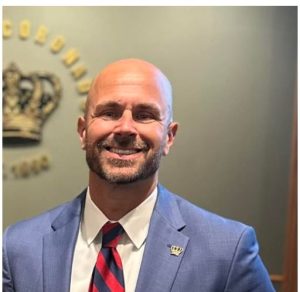
Fun Midterm Election Fact: Richard Bailey Voted for Donald Trump X3

This is the first of a series of November election “fun facts”.

Serving OB, the Peninsula and San Diego Beaches

This is the first of a series of November election “fun facts”.
 How to Make Changes in the Underfunded Finest City
By Paul Coogan
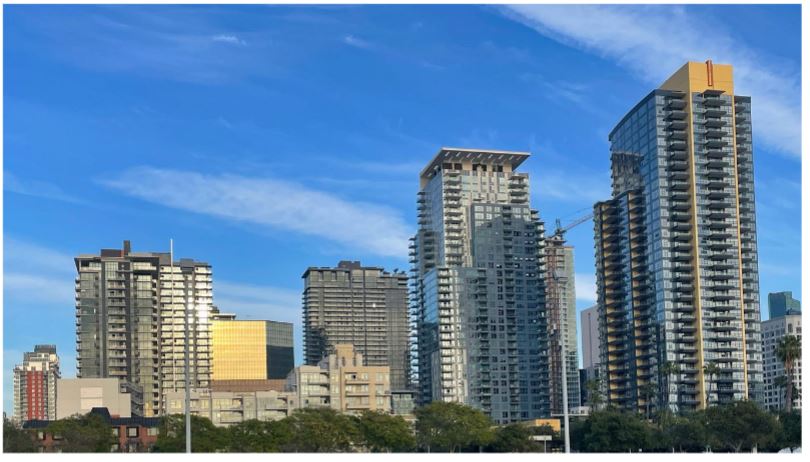
California is the land of gold rush mentality. After the yellow stuff was scooped up, agriculture, hospitality/entertainment, and tech put gold in the coffers.
Now, the boondoggle is real estate, a limited resource and increasingly in demand. Escalating land value triggered a property tax revolt in 1978 (Prop 13) and now we live in the post-capitalist, libertarian result of a society that wants everything but refuses to pay for anything.
The recent trash fee battle in San Diego is a microcosm of this attitude. It started when in 1919, the public voted in favor of the People’s Ordinance to have free waste removal after the city started making money on selling the haul to pig farmers. Thus the metropolis was left scraping the pot to fund the dump year after year. Folks complain about busted bins, but liberals and conservatives alike were willing to join hands and trash city hall for trying to make ends meet.
A change in leadership at City Hall will only be shuffling deck chairs on the Titanic, as the layers of bad policies and worse state laws have created a Gordian knot that strangles new ideas in their infancy.
 By Mark Powell / Times of San Diego / July27, 2026
For years, many of us have been saying the same thing: San Diego is not a bike-friendly city. In five or ten years, I believe many of today’s decision-makers will look back and realize the concerns raised by residents and business owners were not resistance to change; they were grounded in reality.
Unlike many European cities, San Diego was designed around the automobile. European cities evolved over hundreds of years, often between 500 and 1,000 years ago, with compact neighborhoods, narrow streets, and destinations within walking or biking distance. San Diego developed very differently.
Our communities are spread out, our roads are wider, our destinations are farther apart, and our terrain includes countless steep hills. For many people, riding a bicycle is simply not a practical way to get to work, school or run errands.
Supporters of expanded bike lanes often point to ambitious goals for increasing bicycle commuting. There’s nothing wrong with encouraging cycling, but public policy should reflect how people actually choose to travel. Most San Diegans rely on their cars because they need to.
Families juggle work, school, sports, shopping and appointments that often require driving across several neighborhoods in a single day. That reality is unlikely to change simply because more bike lanes are painted on our streets.
 By Marc Elias / Democracy Docket / July 27, 2026
Election Day is less than 100 days away.
Donald Trump is deeply unpopular. The Republican Party has little to show for its time in power. Prices are up, and the economy is stagnant. We are at war in the Middle East.
The GOP is not acting like a party trying to persuade voters to support its candidates — because it isn’t. Instead, the Republican Party’s entire strategy boils down to this:
 By JW August / Special to OB Rag
Shirley Weber, California’s Secretary of State. has responded to a recent veiled threat from the Trump administration warning about criminal prosecutions of any election official allowing ineligible individuals to vote.
President Trump frequently repeats the claim of ineligible voters swinging the results of the 2020 presidential election he lost. No legitimate evidence has ever been provided to back the claim.
Weber’s response was to a letter from attorney and Trump supporter Harmeet Dhillon, who oversees the administration’s civil rights division as an Assistant Attorney General. Weber told Dhillon that “California is in full compliance with federal election law obligations.”
Weber did not respond to an offer of “assistance” from the Trump administration. Instead her unspoken response seemed to say, California electors know what they are doing. To prove her point she sent Dhillon a lengthy list of California and federal laws and codes her office enforces.
 By JW August / Special to OB Rag
San Diegan Shirley Weber, California’s Secretary of State, has received a warning from the U.S.Department of Justice, advising her that she or “any election officer” in California faces serious criminal charges for “knowingly retaining non-citizens on the Statewide Voter Registration List.”
The letter, sent July 7, was signed by Harmeet Dhillon, Assistant Attorney General of the Civil Rights Division. At one time, she was one of the most influential Republican women in California politics, and her stature has grown even more since following President Trump to Washington, where she is now a powerful voice in the party. Under her direction, the division, which 69 years ago was created to protect voting rights and to fight inequality, has changed course.
Before joining the administration, Dhillon was in private practice, and the firm she founded filed lawsuits in support of many of Trump’s goals. This included a case in San Diego, where a Trump anti-vax supporter’s protests were gaining momentum.
Fast forward to the current Trump admiration and her role is again in support of conservative causes. In a recent Los Angeles Times article, a dozen former attorneys in the division said “the division has taken on a far more partisan approach.”
In the same story, Dhillon defended her work, stating that “the division’s actions aren’t political.” She added her work isn’t combative; instead, “it’s transparent.”
Dhillon believes there is clear potential for non-citizens to vote in California elections. The letter to Weber comes amid increasing pressure by the Trump administration to discredit the nation’s voting systems, which the President says are inherently flawed.
 David Garrick at the San Diego U-T wrote an analysis of the current City Council races on July 12th, and here is a summary of some of his findings.
First, they “attracted an unprecedented amount of cash this year from groups funded by labor unions, business interests and statewide organizations,” and he found “the results were decidedly mixed.”
For example, in the District 2 race, “A committee supporting Josh Coyne … spent $300,000, but Coyne didn’t come close to making the November runoff.” In contrast, “Richard Bailey finished first in District 2 thanks partly to more than $200,000 in committee support.”
Yet, candidate Rafael Perez in the District 8 race finished last despite $150,000 in committee support. One of the candidates who made the primary run-off was Gerardo Ramirez “after benefiting from more than $200,000 in committee support….”
Overall, the monies spent on these races “are dramatically higher than typical San Diego council race contributions from independent committees, which allow supporters to exceed the $800 maximum an individual can contribute directly to a campaign,” reports Garrick.
 From Calling a “National Emergency” Due to “Foreign Intervention in Elections” to ICE Agents at the Polls, to Attacks on Leftists, Trump’s Speech Tonight Has Myriad of Authoritarian Possibilities
By Maggie Miller, Gregory Svirnovskiy and Aaron Pellish / Politico / July 16, 2026
President Donald Trump seemingly has a plan for the nation’s election apparatus: Dismantle the existing system with a series of cuts, firings and threats, rather than a sledgehammer blow.
Just last week Trump eviscerated the relatively obscure Election Assistance Commission, alarming state election officials across the country who warned it could undermine cybersecurity resources for states and localities.
That was just one of the moves the White House has made since Trump returned to office. The president has repeatedly tried to change American election policy via executive order, only to be rebuffed by the courts. And he continues to squeeze congressional Republicans to pass legislation that would force voters to show proof of citizenship at the polls.
Elsewhere, the Justice Department has demanded states hand over their voter rolls, and sent letters last week to state officials threatening prosecution if they allowed any non-citizen voting, a move that voting rights advocates say is meant to sow distrust and is already illegal under several existing statutes. The DOJ’s efforts to compel states to turn over voting rolls has been rejected by more than a dozen courts.
They’re all parts of a strategy that spans the entirety of the existing system. Last week, the Department of Homeland Security threatened federal election security money for states if they don’t use a federal system to verify voter citizenship. And the Cybersecurity and Infrastructure Security Agency was forced to cut its election security programs after DOGE-led layoffs.
And now, Trump is set to deliver a speech Thursday evening that his allies have claimed will validate his long-held conspiracy theory that the 2020 election was stolen from him. It’s the latest attempt by the president to undermine confidence in the electoral system, as he continues to obsess over 2020 and insist that elections both federal and local are rigged across the country.
“This is a concerted effort of death by a thousand cuts,” said Ingham County, Michigan, Clerk Barb Byrum, a Democrat. “Every day is another battle, but the war that we’re fighting is to maintain our democracy.”
 By Associated Press / npr / July 15, 2026
President Donald Trump will deliver a primetime address this week that he says will include a focus on elections, suggesting he could revisit long-debunked conspiracy theories about his 2020 defeat to Democrat Joe Biden. The speech comes as he’s escalated calls for Republicans to pass tighter federal voting rules for November’s midterm elections.
The Republican president has been guarded about what he plans to say in the 9 p.m. Thursday speech, scheduled as he confronts a collapsing deal to end the war with Iran. He also faces numerous domestic issues, including recent deadly shootings by Immigration and Customs Enforcement officers. Asked for a preview of the speech on Tuesday, Trump offered scant detail but said he has “really big news.”
“It doesn’t get bigger, because without free and fair elections, you don’t have a country,” Trump said in the Oval Office. He refused to go further, saying he wanted to “save it” for the moment, though he also hinted he would be talking about a hodgepodge of issues.
“We’ll be discussing other things, too,” Trump said, without elaborating. “It’s going to be a very big announcement.”
Trump has used the power of the primetime presidential address — typically reserved for milestones — to deliver politically charged speeches before, including one in December when he sought to blame the challenging economic climate on Democrats. But Thursday’s address seems poised to go even further, using the moment to amplify election lies before an audience of millions in an effort to boost Republican prospects before midterms that threaten to hobble Trump for the remainder of his term.
On Monday, when asked about the speech, Trump repeated baseless claims of voter fraud in the Los Angeles primary race for mayor. During the interview with conservative outlet Newsmax, Trump said Republican Spencer Pratt lost his primary bid because of fraud, citing in part California’s slow vote count.
 More on the Emerald Hills Radio Towers Project
By Robert Campbell
At the July 7th City Council hearing on the Emerald Hills Radio Towers project, Henry Foster’s Chief of Staff, Dan Horton entered his version of the Footnote 7 historical timeline into the record as “late arriving materials.” While his timeline begins on September 11, 2019, public records requests and review of City Council hearings have allowed me to plug the gaps and correct the record with missing facts.
The true written record starts on April 16, 2019, when Development Services Department (DSD) Assistant Director Gary Geiler wrote to land use attorney and developer Dennis Dawson, saying, “It was nice meeting with you to go over the potential development… I will continue to discuss with the Planning Department the feasibility of the Rezone on a neighborhood basis… given the current density restrictions.”
The following narrative is fully documented and supported by public records requests, public archives, and verified audio and video recordings.
 April – May 2019
Internal Reality: DSD Assistant Director Geiler meets privately with developer attorney Dennis Dawson. They discuss “potential development” and “rezone feasibility” for a “Broadway Site” under current density restrictions. Geiler provides Dawson with municipal codes for RS (Residential-Single) zones and Planned Development Permits to map out a strategy.
 Lorenzo Salgado Araujo lived in Houston for 35 Years, Built Homes for Others; Videos and Witnesses Contradict ICE Narrative of Murder
PBS / July 10, 2026
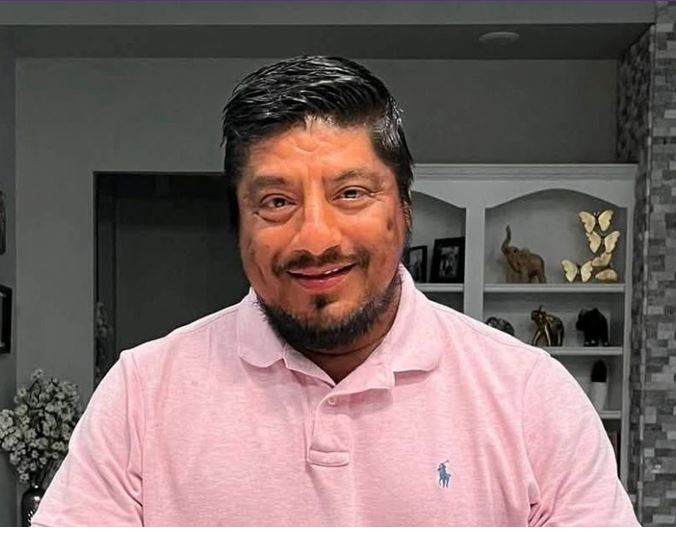
A U.S. Immigration and Customs Enforcement officer fatally shot Lorenzo Salgado Araujo, a Mexican national who lived in the U.S. for decades, as the homebuilder drove his construction crew to a Houston job site.
His death set off protests in Texas’ largest city and calls from Democrats and Salgado Araujo ‘s family for an independent investigation. The shooting on Tuesday in a heavily Hispanic neighborhood is at least the eighth death during the Trump administration’s immigration enforcement campaign.
The Department of Homeland Security, which oversees ICE, said federal officers were looking for someone else when they attempted to stop Salgado Araujo’s vehicle. DHS said Salgado Araujo rammed an ICE vehicle and that an officer opened fire in self-defense.
Salgado Araujo’s family said he was very close to obtaining legal status in the U.S. after living in the country for 35 years, and that he knew what to do if approached by ICE officers. Ronaldo Salgado, his son, said his father may have been scared that the people in unmarked vehicles were going to steal his tools.
Here’s what we know about Salgado Araujo’s shooting.
 By Kate Callen
The City of San Diego had a one-time-only opportunity to compensate Southeastern San Diego for decades of neglect and broken promises. It has thrown that away to hand an iconic community parcel over to a national developer with a checkered history.
On July 7, by an 8-1 vote, the City Council denied an appeal to stop D.R. Horton, which is facing class action lawsuits across eight states, from building 123 homes on a 31-acre hilltop plateau in Emerald Hills.
The future owners of those homes will have exclusive access to a beloved natural asset: a stunning panoramic 360-view of the San Diego-Tijuana coastal region. People in the surrounding communities, who have long treasured the vista from the Radio Towers Hill, will be shut out.
And their dream of building a landmark destination like the Griffith Park Observatory in Los Angeles that would bolster the local economy has now collapsed.
Communities across the city have endured similar heartaches when iconic properties, like the Little Red Bungalow in Mission Hills, are razed by out-of-town developers.
But the Emerald Hills loss is uniquely tragic. It happened because in 2019, someone inside City Hall targeted Southeastern communities by slipping the infamous “Footnote 7” into the municipal code.
Say Keep it goin' to the OB Rag
with your donation today!




Recent Comments