

Good News: Communities Across America Are Resisting Trump’s Plans to Convert Warehouses Into Immigrant Prison Camps
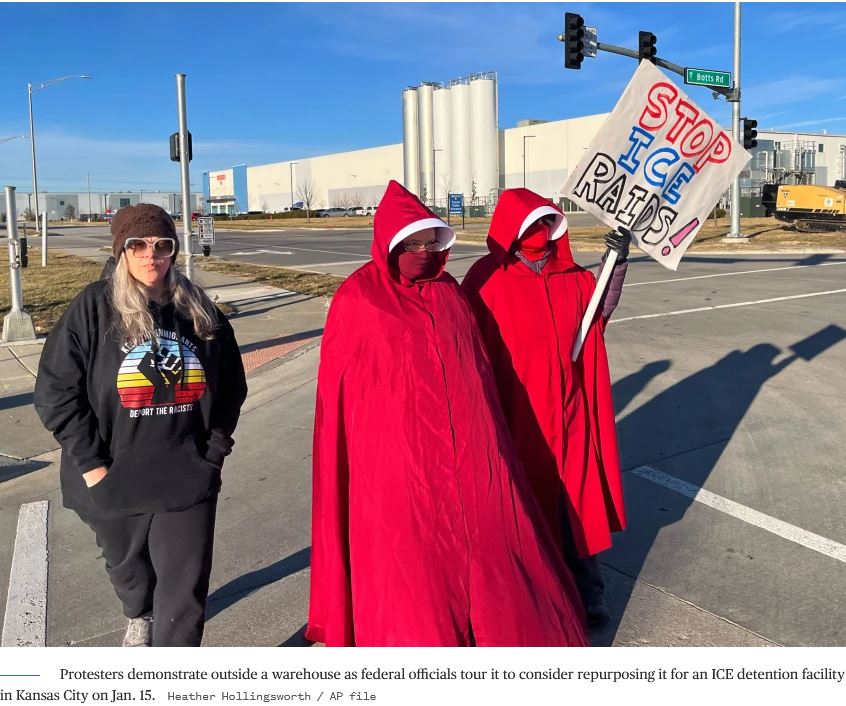 Amid all the crap that we as Americans are having to deal with coming out of the Trump administration, there is good news.
Local communities across the country along with some state and local officials are resisting attempts by President Donald Trump to house thousands of detained immigrants in their areas in converted warehouses, privately run facilities and county jails. These are immigrant prisons.
In red states, red counties and red towns and cities, people are pushing back so hard that ICE officials are having troubles finding locations for their detention centers. In Texas, in Oklahoma, in Utah, in New Mexico, in Virginia, proposed ICE facilities are running into brick walls by grassroots resistance.
Why is this happening? MSNOW reports:
Federal officials have been scouting cities and counties across the U.S. for places to hold immigrants as they roll out a massive $45 billion expansion of detention facilities financed by Trump’s recent tax-cutting law.
The fatal shootings of Renee Good and Alex Pretti during immigration enforcement actions in Minnesota have amplified an already intense spotlight on U.S. Immigration and Customs Enforcement, increasing scrutiny of its plans for new detention sites.
For instance, officials in Social Circle, Georgia, El Paso, Texas, and Roxbury Township, New Jersey, all have raised concerns about their locales being used and they all cite a lack of water and sewer capacity to transform warehouses into detention sites.
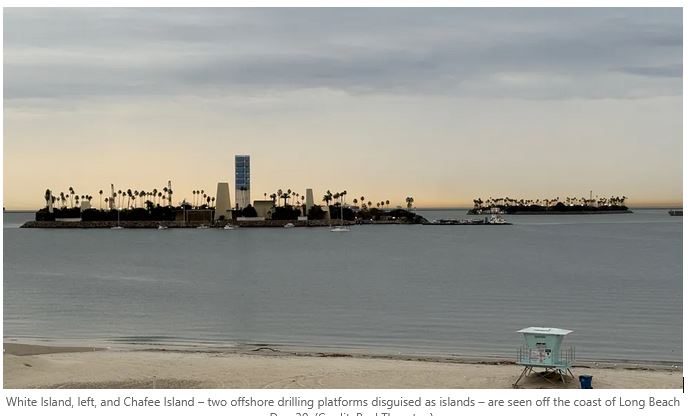 By David Helvarg /
  By Jane Kim /
 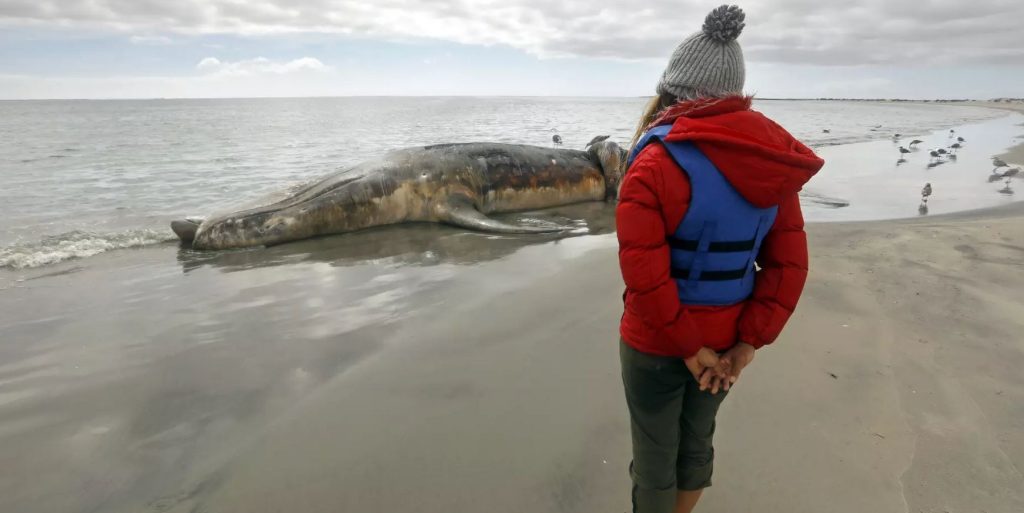 By David Helvarg /

 Note: Author’s views do not necessarily reflect the views of the OB Rag.
 Here’s a bunch of seemingly unrelated articles that have been sitting in my “in-basket” for a while — some for months. Yet, they deserve attention –so here they are:
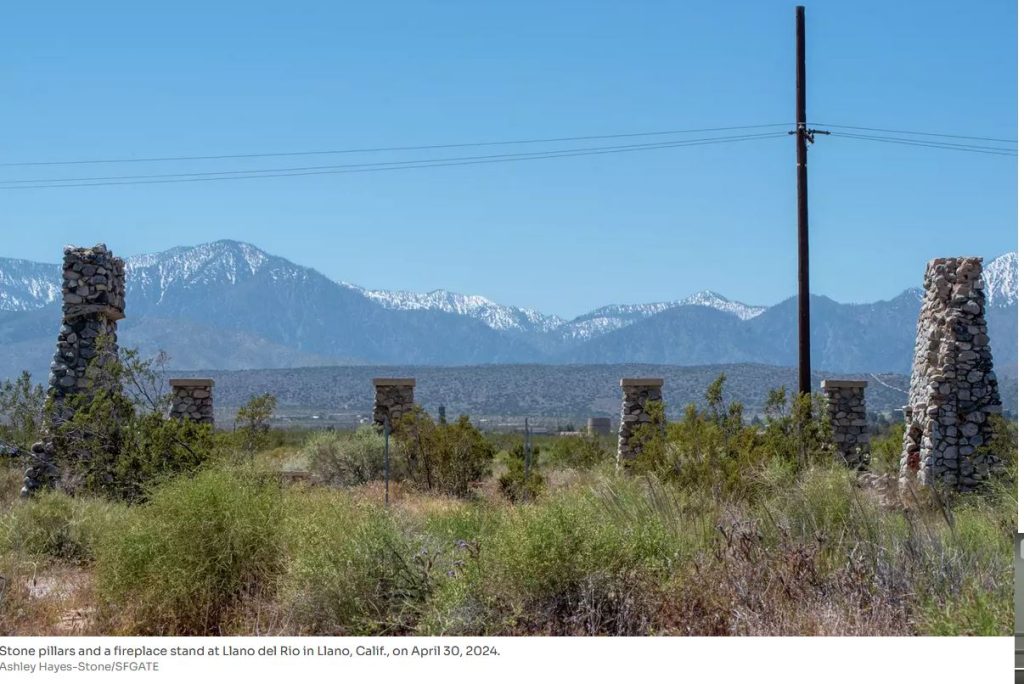
 The remains of a grand hotel and social hall are the only recognizable infrastructure left of the failed town, which is visible even from the highway — if you don’t blink. The foundations of other nearby buildings sink into the ground, faded blue and purple graffiti covering the splintering stone, the lettering disappearing into low concrete walls. From the middle of the ruins, trailers and warehouse structures under the power lines jolt you back to the modern day from any dreams of early 1900s life.
 By City News Service –
  By Alexis Sterling /
 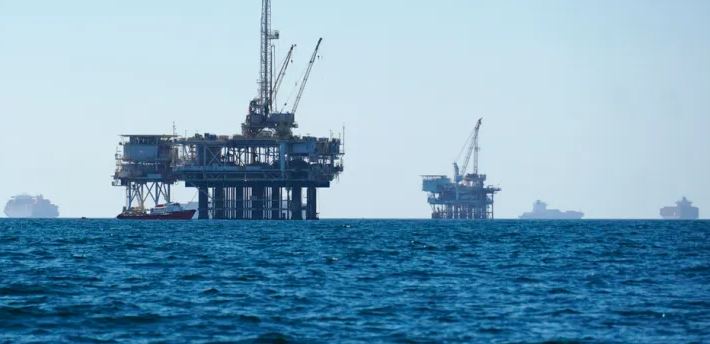 San Diego County Supervisor Terra Lawson-Remer held a community meeting in Encinitas Thursday, Dec. 4, to urge the public to take a stand against the Trump administration’s plans to expand Califonia’s offshore drilling. She was joined by Solana Beach Mayor Lesa Heebner. The meeting had been organized by the environmental groups California Coastal Protection Network, Oceana, Surfrider Foundation and Wildcoast.
 Lawson-Remer said she and others are united in defending the San Diego region, and told President Donald Trump and oil executives to “go pound sand.”
 $283.7 million in tax revenue raised in the third quarter of 2025 alone







Recent Comments