Send the Rag Your Favorite King Tide Photo from this Year
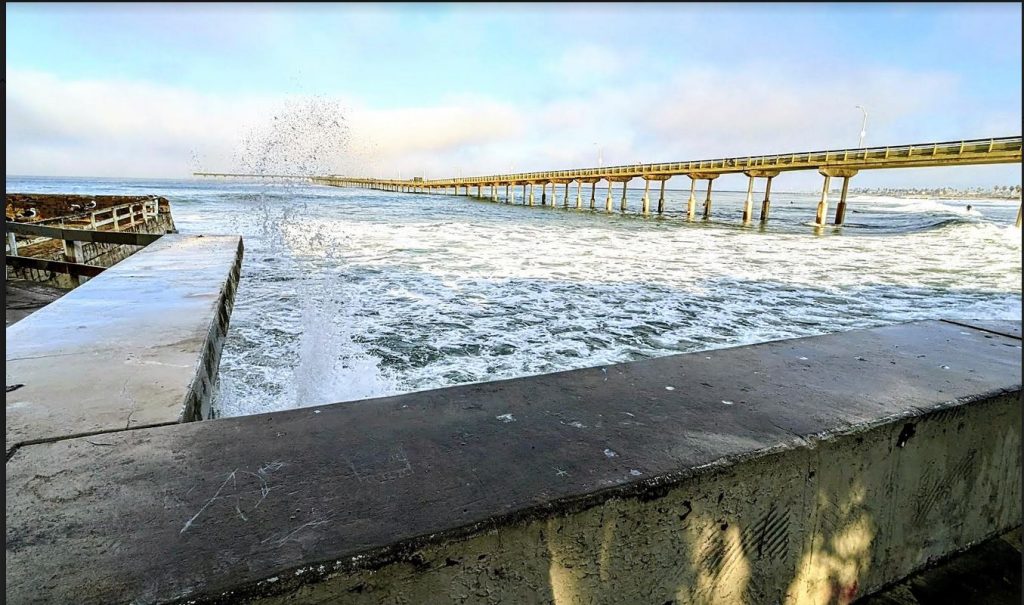 The Rag will publish your great King Tide photos!! Just send (1000 pixels max) to obragblog@gmail.com and we’ll post it.

Serving OB, the Peninsula and San Diego Beaches

The Rag will publish your great King Tide photos!! Just send (1000 pixels max) to obragblog@gmail.com and we’ll post it.
 More on the Emerald Hills Radio Towers Project
By Robert Campbell
At the July 7th City Council hearing on the Emerald Hills Radio Towers project, Henry Foster’s Chief of Staff, Dan Horton entered his version of the Footnote 7 historical timeline into the record as “late arriving materials.” While his timeline begins on September 11, 2019, public records requests and review of City Council hearings have allowed me to plug the gaps and correct the record with missing facts.
The true written record starts on April 16, 2019, when Development Services Department (DSD) Assistant Director Gary Geiler wrote to land use attorney and developer Dennis Dawson, saying, “It was nice meeting with you to go over the potential development… I will continue to discuss with the Planning Department the feasibility of the Rezone on a neighborhood basis… given the current density restrictions.”
The following narrative is fully documented and supported by public records requests, public archives, and verified audio and video recordings.
 April – May 2019
Internal Reality: DSD Assistant Director Geiler meets privately with developer attorney Dennis Dawson. They discuss “potential development” and “rezone feasibility” for a “Broadway Site” under current density restrictions. Geiler provides Dawson with municipal codes for RS (Residential-Single) zones and Planned Development Permits to map out a strategy.
 By Debbie L. Sklar / Special to the OB Rag
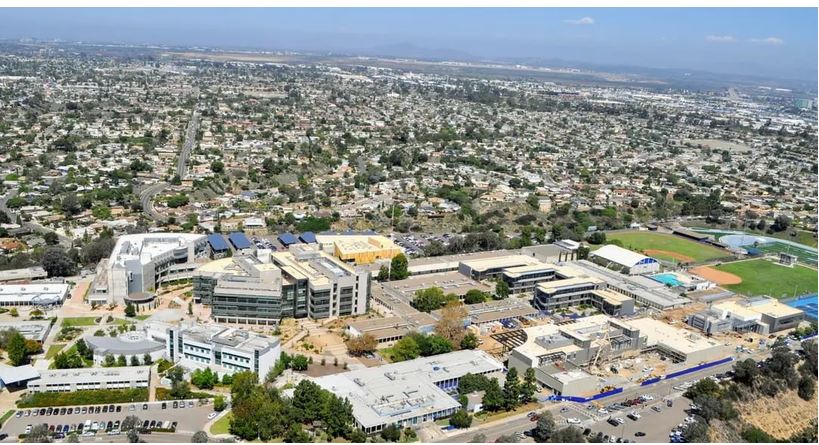
Linda Vista may not always be the first San Diego neighborhood that comes to mind when people think about local history, but its story is deeply connected to the growth and transformation of the city itself.
Located on a mesa overlooking Mission Valley, the neighborhood was born out of necessity during World War II, when San Diego was rapidly becoming one of the nation’s most important defense and aviation centers.
What began as a federal housing project for wartime workers eventually grew into a diverse community with its own identity, traditions, and history.
The name Linda Vista, which means “pretty view” in Spanish, dates back to the late 1800s. But the Linda Vista we know today began taking shape in 1941, when the federal government purchased land to build housing for thousands of workers arriving in San Diego to support the war effort.
At the time, companies such as Consolidated Aircraft were expanding rapidly, producing aircraft needed by the military. Workers poured into the city, creating an urgent need for housing. The answer was Linda Vista, one of the largest wartime housing projects in the United States.
 By JW August
Laurie Holcomb, founder of a multiple cannabis companies, has made serious errors in judgment, alleges the U.S.Attorney’s Office in San Diego. The government announced last week it had filed a false claims act complaint against her, claiming that she had illegally obtained five pandemic loans from the federal government.
Her companies were engaged in the “cultivation, distribution, and retail sale of recreational cannabis and cannabis products,” according to the government’s filing. As is commonly known, it’s legal to plant, cultivate and smoke marijuana in California if you play by its rules. Not so with the federal government if it’s sold for recreational use, it’s still considered highly restricted Schedule I drug.
Holcomb’s mistake, the U.S. Attorney alleges, was when she asked the government for money. It was during the pandemic times and she borrowed from the Paycheck Protection Program, or PPP, which was created to help businesses during the pandemic. She convinced the government to give her $1.4 million.
Holcolm’s company claims to have generated $100 million in annual sales of cannabis, according to various media reports. The company also has a 100,000 square-foot cultivation campus in Los Angeles.
The company is described in the media reports as one of the leading legal cannabis companies in the state, having distributed marijuana all over California, including numerous locations in San Diego. Debts and merger decisions forced her to file for bankruptcy protection in March of last year.
 By Steven Mihailovich / Point Loma-OB Monthly / July 10, 2026
With ideas ranging from installing additional pedestrian beacon crossings to a complete replacement of the Ocean Beach recreation center, the Ocean Beach Planning Board unanimously approved a list of 14 capital improvement project requests to submit to the city of San Diego for consideration and execution, at its July 7 meeting.
 The creation of a CIP list by the OBPB is an annual exercise dictated by the city, which combines the list with input from the local councilmember and other qualified agencies and groups to direct limited city funding for projects that best meet the community’s wishes. And though the CIP requests were predominantly replays from last year’s list, the board adopted three more following public feedback at the OB Street Fair on June 27.
Big Ticket Projects
In composing the list, OBPB treasurer Tracy Dezenzo wondered whether perennially listing requests for large ticket items in the millions of dollars would serve any practical purpose.
“The question is, do we want to again ask for the pier (to be replaced), ask for the lifeguard tower (to be replaced), just to make sure that’s on our list every single year?” she asked. “Or do we think that they know by now that we’ve asked for it every single year?”
Thus, the conversation focused on the OB Pier.
 Monday & Tuesday: Last Chance to Speak Out Against Mission Bay Bathroom Closures
The San Diego Community Coalition publishes this email bulletin to keep our members and the general public informed about important Council hearings and other city public meetings.
Item 52: Sixth Amendment to Increase Expenditure Authority for the Procurement Contract Between the City of San Diego and Rehrig Pacific Company for Waste Carts, Recycling Cars, Cart Parts, Bins and Related Products
Why it matters: This consent item reveals that the City’s haphazard effort to close its budget gap by charging for trash collection has so far cost a whopping $106,526,000. That expenditure is roughly *200* times the $546,000 the city will save by closing 13 (nearly half) of the 28 bathrooms at Mission Bay.
Speaking of which…
 By Robert Campbell
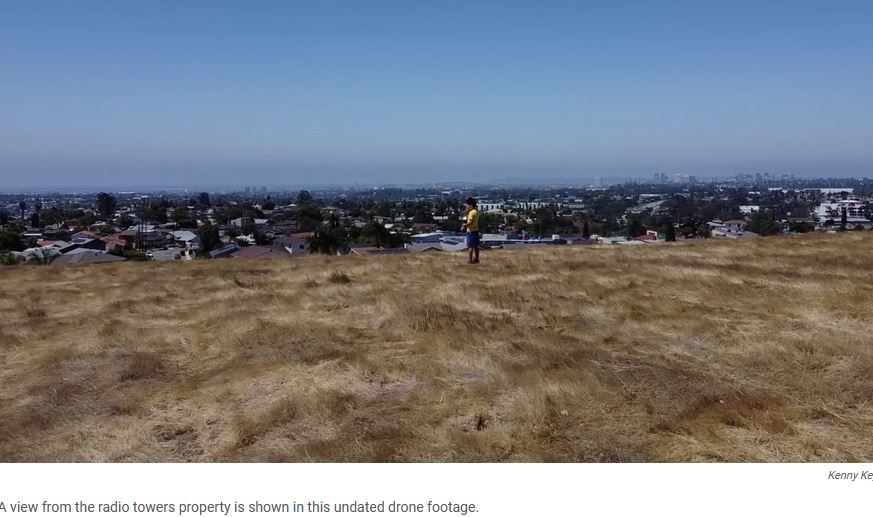
On Tuesday, July 7th, we saw something spectacular. Councilmember Henry Foster III and County Supervisor Monica Montgomery Steppe’s defense of the Emerald Hills “Radio Towers” development which relied heavily on a well-substantiated historical truth: that large lot zoning was historically used as an exclusionary tool to keep minorities out of wealthy, white neighborhoods. But applying that historical framework to the Radio Towers project is a profound misdirection.
Their impassioned argument has left the community deeply puzzled, not because the history is wrong, but because the application of it in this instance is completely inverted.
Selective Application of Housing Density
The claim that dismantling large-lot restrictions is an act of racial and economic equity will leave you scratching your head when looking at a map of San Diego. The policy enacted here, Footnote 7, was a direct shot at Emerald Hills and Encanto, historically minority-majority neighborhoods. If the goal truly were to use smaller lot sizes to desegregate and dismantle historical exclusion, that policy would be aggressively targeted at the predominantly white, high-resource neighborhoods that actually practiced that exclusion. Instead, those wealthy neighborhoods in San Diego remain entirely intact and protected with their large lots, while two minority-majority neighborhoods are now forced to absorb density and lose their remaining open space to this density that white neighborhoods are not required to do.
 By Shireen Akram-Boshar / Truthout / July 2, 2026
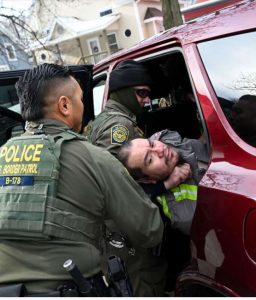
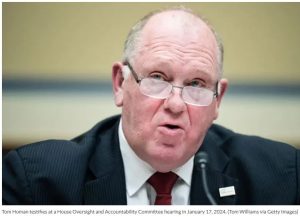
Immigration and Customs Enforcement (ICE) has detained over 10,000 people across the U.S. over [a recent five day period].
According to The New York Times, top ICE officials have pushed to double daily arrest numbers in recent days after the White House called for an increase to 2,000 ICE arrests per day.
The number of people detained in ICE immigration jails has also jumped by nearly 4,000 in recent days, with more than 63,000 people in ICE detention nationwide.
The White House’s push for an increase in ICE arrests and detentions is likely buoyed by the Supreme Court decisions at the end of June that gave President Donald Trump increased power in implementing his anti-immigrant agenda. The Supreme Court gave Trump the green light to revoke Temporary Protected Status (TPS) from some 350,000 Haitians and Syrians, while giving border officials more ability to remove lawful green card holders and reject asylum seekers.
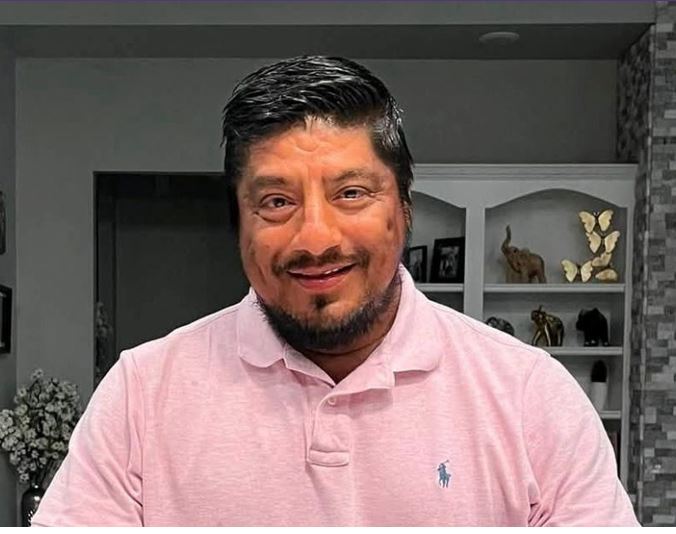 Lorenzo Salgado Araujo lived in Houston for 35 Years, Built Homes for Others; Videos and Witnesses Contradict ICE Narrative of Murder
PBS / July 10, 2026
A U.S. Immigration and Customs Enforcement officer fatally shot Lorenzo Salgado Araujo, a Mexican national who lived in the U.S. for decades, as the homebuilder drove his construction crew to a Houston job site.
His death set off protests in Texas’ largest city and calls from Democrats and Salgado Araujo ‘s family for an independent investigation. The shooting on Tuesday in a heavily Hispanic neighborhood is at least the eighth death during the Trump administration’s immigration enforcement campaign.
The Department of Homeland Security, which oversees ICE, said federal officers were looking for someone else when they attempted to stop Salgado Araujo’s vehicle. DHS said Salgado Araujo rammed an ICE vehicle and that an officer opened fire in self-defense.
Salgado Araujo’s family said he was very close to obtaining legal status in the U.S. after living in the country for 35 years, and that he knew what to do if approached by ICE officers. Ronaldo Salgado, his son, said his father may have been scared that the people in unmarked vehicles were going to steal his tools.
Here’s what we know about Salgado Araujo’s shooting.
 By Shannon Handy / CBS8 / July 8-9, 2026
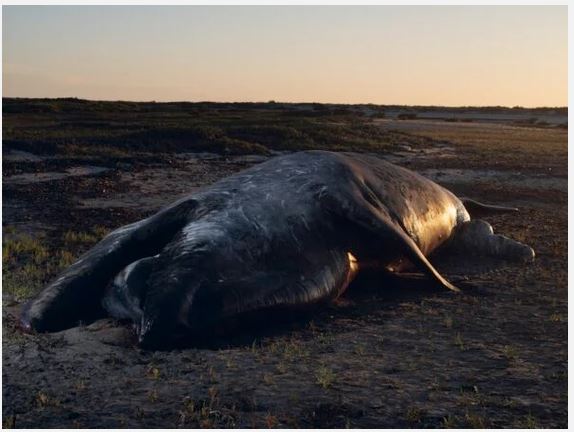
Researchers reveal alarming statistics about gray whales, declaring a “catastrophic mortality event” along the West Coast as strandings escalate dramatically this year. The National Oceanic and Atmospheric Administration reports a staggering 145 gray whales have been found stranded dead on the West Coast, including regions in Mexico and Canada, marking a significant increase that could make 2026 one of the deadliest years on record for these marine mammals.
The current stranding rate starkly contrasts with the previous two decades, where the average number of stranding per year was around 43 from 2006 to 2023. In 2025, the number surged to 179, raising further concerns among scientists and conservationists.
 The Ocean Beach Historical Society “Ye Old Tale of King Snedley’s Beer and Holland Embassy on Sunset Cliffs Boulevard”
Mark your calendar for… Thursday, July16, 2026, at 7 PM.
 By Quinta Jurecic / The Atlantic / July 6, 2026
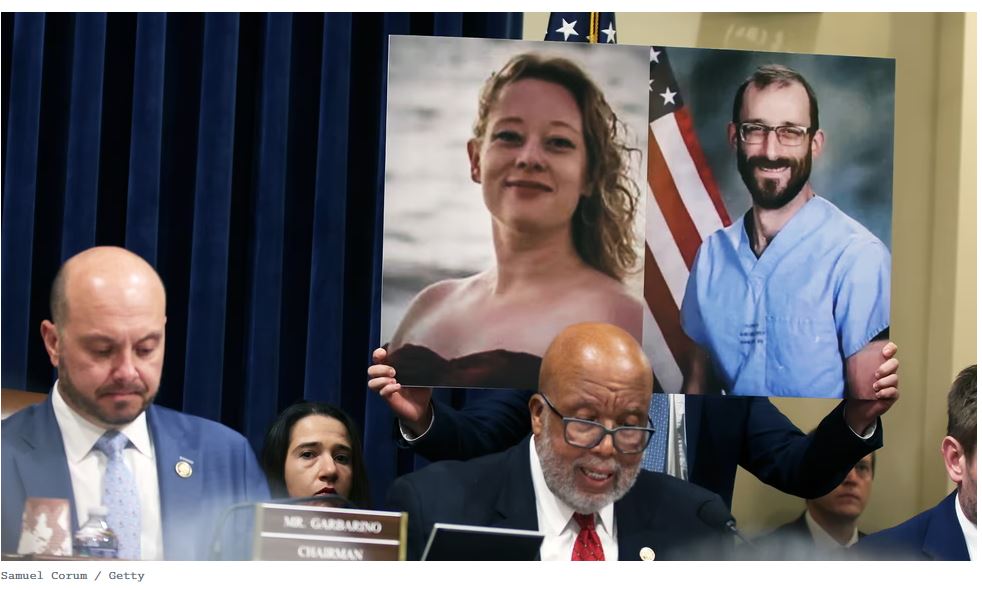
Nearly six months have passed since federal officers shot and killed Renee Good and Alex Pretti on the streets of Minneapolis. No one has been arrested, the Trump administration has provided no reason to believe that any serious investigation is taking place, and federal officials continue to stonewall state and local investigators in Minnesota.
This inaction was predictable. The day after Good’s death, Vice President Vance insisted at a press conference that the agent who shot her would face no criminal charges. “That guy is protected by absolute immunity,” Vance told reporters. “He was doing his job.” Soon, Stephen Miller doubled down on the message, announcing “to all ICE officers” that “you have federal immunity in the conduct of your duties.” Federal agents apparently received the message: The next day, an ICE agent fired a gun into a Minneapolis home, wounding a Venezuelan immigrant, Julio Cesar Sosa-Celis. The week after that, Pretti was killed outside a doughnut shop. The Department of Homeland Security called him a “domestic terrorist” and said that the officers who shot him had acted in self-defense.
Typically, after a contentious killing by a law-enforcement officer, the Justice Department would launch a criminal civil-rights probe. Following George Floyd’s murder, for example, DOJ conducted an investigation alongside Minnesota law enforcement, and both federal and state prosecutors brought separate charges against the Minneapolis police officer Derek Chauvin. So far, though, the federal government has succeeded in protecting immigration officers from serious consequences for the violence of what DHS termed “Operation Metro Surge.”
Say Keep it goin' to the OB Rag
with your donation today!







Copyright © 2026 OB Rag
Recent Comments