Polls Show Trump’s War on Iran Deeply Unpopular; Only 1 in 4 Approve of US Strikes

 Source  March 5, 2026  3 Comments on Polls Show Trump’s War on Iran Deeply Unpopular; Only 1 in 4 Approve of US Strikes
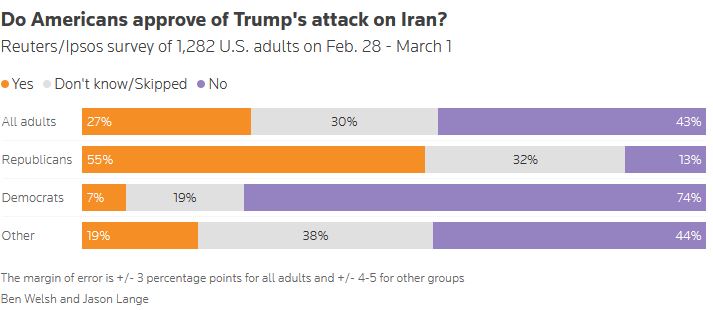
Only one in four Americans approves of ?U.S. strikes on Iran that have plunged the Middle East into chaos, while about half — including one in four Republicans — believe President Donald Trump is too willing to use military force, according to a Reuters/Ipsos poll.

Some 27% of respondents said they approved of the strikes, which were conducted alongside Israeli attacks on Iran, while 43% disapproved and 29% were not sure. About nine in 10 respondents said they had heard at least a little about the strikes, which began early on Saturday with a ?surprise attack that killed Iran’s leader.

The poll, which closed on Sunday, showed that 56% of Americans think Trump, who has also ordered strikes in Venezuela, Syria and Nigeria in recent months, is too willing to use military force to advance U.S. interests. ?The vast majority of Democrats – 87% – held this view, as did 23% of Republicans and 60% of people who don’t identify with either political party.

The poll was conducted amid ongoing attacks on Iran by the U.S. and Israel, and closed before the U.S. military announced the first American casualties in the operation.

Continue Reading Polls Show Trump’s War on Iran Deeply Unpopular; Only 1 in 4 Approve of US Strikes

Barrio Logan Sounds Alarm Over Threat to Landmark Murals Via Gentrification

 Source  March 5, 2026  0 Comments on Barrio Logan Sounds Alarm Over Threat to Landmark Murals Via Gentrification

by Roberto Camacho / Times of San Diego • Palabra / March 1, 2026

In a typically cool spring morning in San Diego, muralist Daniel Angeles took a phone call that chilled his soul: His first piece of public art in the city’s Latino-centric Barrio Logan, a large mural called “Birth of the Hummingbird,” was being erased. He clicked on a live video and was horrified that his masterwork was being painted over — the vibrant colors of his mural gradually covered by mundane, muddy browns.

Angeles called the property’s owner, who, years before, had allowed him to paint the building’s street-facing wall and fence. Angeles thought of invoking the California Art Preservation Act and the federal Visual Artist Rights Act of 1990, written to help artists preserve public works. Damaging or modifying works without an artist’s consent can be unlawful. Property owners are supposed to send notice three months before demolition or repainting, giving artists time to remove, document or relocate their murals.

“I was shocked. I couldn’t do anything since I was at a music performance for my oldest daughter,” Angeles said. “She was performing when this youngster FaceTimed me as he was running toward the wall to show me a couple of guys were going over the art with rollers and dark paint. I couldn’t believe that it was going away.”

Angeles, who paints under the name Dentlok, is a celebrated muralist, tattoo artist and long-time resident of the neighborhood. He said he received no warning before his prized mural was erased.

Continue Reading Barrio Logan Sounds Alarm Over Threat to Landmark Murals Via Gentrification

When the Narrative Doesn’t Match the Record and the Historic Review Process Is Not the Problem in Delays

 Source  March 5, 2026  0 Comments on When the Narrative Doesn’t Match the Record and the Historic Review Process Is Not the Problem in Delays

By Alana Coons / SOHO March-April 2026

At the City of San Diego Historical Resources Board meeting on February 26, 2026, the Newman Building project in North Park was on the consent agenda. In thanking the applicant, board member Rammy Cortez repeated a familiar refrain—that historic resources require applicants to “jump through hoops,” and that preservation reform in Package B of the preservation and progress Initiative would streamline projects like this one.

However, as this case demonstrates, the record does not support that narrative.

When Newman Building developer Nate Cadieux responded during this public meeting, he made something very clear: The historic review process was not the problem. In Cadieux’s words, the historic component to obtain a building permit was “streamlined, not scary, not complicated.” He described working with the HRB Design Assistance Subcommittee as collaborative and constructive. He credited Heritage Architecture, and preservation advocates, noting Bruce Coons of SOHO, for providing helpful, clear guidance.

Continue Reading When the Narrative Doesn’t Match the Record and the Historic Review Process Is Not the Problem in Delays

40-Year UCSD Study of Point Loma and La Jolla Kelp Forests Show Steady Decline Due to Climate Crisis

 Source  March 5, 2026  0 Comments on 40-Year UCSD Study of Point Loma and La Jolla Kelp Forests Show Steady Decline Due to Climate Crisis

From UC San Diego Today Now / March 5, 2026

The growth form of giant kelp (Macrocystis pyrifera) is composed of shoots known as stipes instead of branches. From one parent holding fast to the hard bottom might come as many as 150 stipes.

Typically the tips of the biggest kelp bob at the ocean surface and calm the waters, appearing as patches of gold visible from land — a sign of the good health of the ecosystem that it anchors.

But the kelp as San Diego knows it is in trouble.

In January, a team led by UC San Diego’s Scripps Institution of Oceanography released an unmatched history of kelp forests off La Jolla and Point Loma. Together spanning nearly 19 square kilometers (7.3 square miles), they are the largest on the United States West Coast. Amassed over more than 40 years, their story reveals a progression of steady decline that transcends typical cycles of crash and recovery.

Now, say the researchers, competing organisms usually cast in shadow by the kelp are emerging as winners. The giant kelp are losing, but so might be myriad other organisms – fishes and humans included – as another natural order is disrupted by climate change and other new circumstances.

The downsides range from a decrease in the catch available to recreational fishers in San Diego to the loss of the nurseries that sea stars and open ocean fishes use to protect their larvae. Even the beach wrack – the large piles of decaying kelp that wash up after storms – is diminishing. Though the absence of the pungent kelp will be a relief to some beachgoers, those piles attract the kelp flies that are an important source of food for seabirds.

Continue Reading 40-Year UCSD Study of Point Loma and La Jolla Kelp Forests Show Steady Decline Due to Climate Crisis

Hot Button Issues Raised at the Linda Vista Town Hall with Councilmember Raul Campillo

 Source  March 5, 2026  2 Comments on Hot Button Issues Raised at the Linda Vista Town Hall with Councilmember Raul Campillo

By Tanja Kropf / Clairemont Explore / March 4, 2026

Questions about trust in City Hall, including whether residents believe their leaders are listening, dominated a March 2 Linda Vista town hall with San Diego City Council Member Raul Campillo, who represents District 7.

Campillo recently held a series of town halls in his district, in the neighborhoods of Linda Vista, Serra Mesa, Navajo, and Tierrasanta.

From the failed one-cent sales tax measure to trash fees, parking fees, bonus ADUs, fire safety laws, and e-bikes, the evening revealed a consistent theme. Residents are skeptical of San Diego’s government, a concern Campillo says he doesn’t take lightly.

Hot Button Items That Lead San Diegans to Distrust City Hall

Voters Rejected Sales Tax Increase

Campillo began the evening by reflecting on the failed one-cent sales tax ballot measure, which he had supported.

“As many of you know, in 2024, I was pushing hard for the one-cent sales tax on the ballot,” started Campillo. That measure failed.

“What that told me was San Diego voters are not ready to trust the city with more money, and so we need to listen accordingly,” he said. Campillo said that view was not widely shared by his fellow council members or by Mayor Todd Gloria.

Continue Reading Hot Button Issues Raised at the Linda Vista Town Hall with Councilmember Raul Campillo

District 2 Candidate Forum in Clairemont Tonight — Thursday, March 5th

 Frank Gormlie  March 5, 2026  1 Comment on District 2 Candidate Forum in Clairemont Tonight — Thursday, March 5th

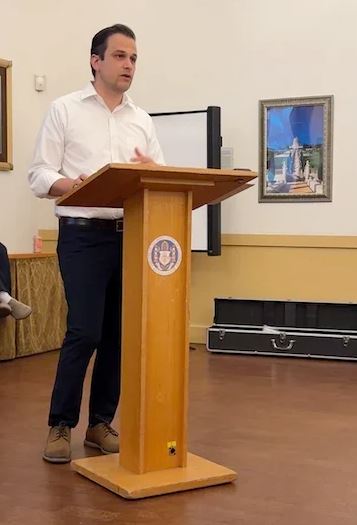
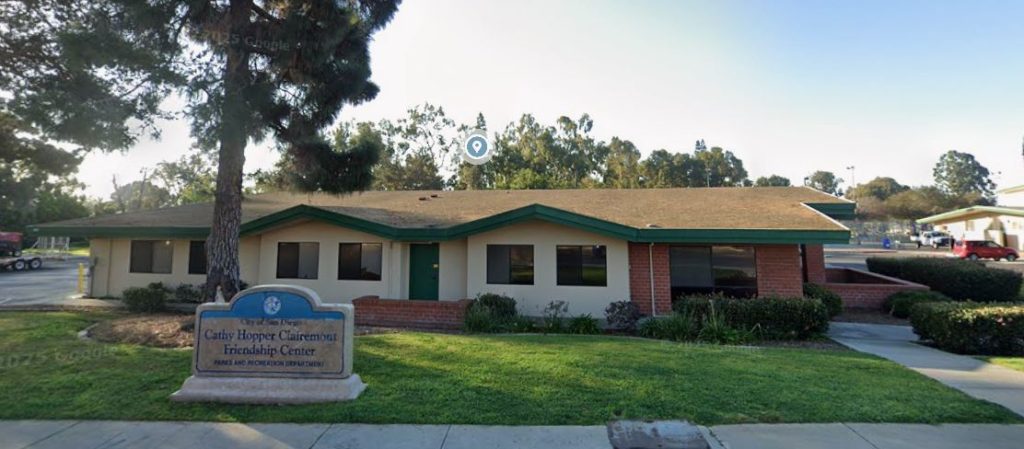
The first District 2 candidate forum organized by the League of Women Voters San Diego is tonight, Thursday, March 5  –    5:30-7:30 PM  at the Cathy Hopper Clairemont Friendship Center, located at  4425 Bannock Ave, San Diego 92117   This Forum is also hosted by the Clairemont Town Council.
Seven candidates have confirmed their attendance, and several more may come.

Continue Reading District 2 Candidate Forum in Clairemont Tonight — Thursday, March 5th

Lawyer Claims Environmental Analysis of Midway Rising Flawed; Residents Destined to Gridlock; Taxpayers to Pay for Project Infrastructure

 Source  March 4, 2026  3 Comments on Lawyer Claims Environmental Analysis of Midway Rising Flawed; Residents Destined to Gridlock; Taxpayers to Pay for Project Infrastructure

Attorney Represents Point Loma Residents Increasingly Alarmed at Coming Gridlock
By Jennifer van Grove / San Diego Union-Tribune / March 3, 2026

A letter sent last week to San Diego leaders asserts that the environmental analysis for the Midway Rising project is legally flawed, and will, if approved, not only lead to additional gridlock in the area but force taxpayers to bear the brunt of infrastructure needs because of the limited scope of study.

The legal letter, addressed to Mayor Todd Gloria and San Diego City Council members, identifies six areas where the project’s state-mandated environmental impact report is described as substantially deficient. The most severe omission is said to be the report’s failure to evaluate the cumulative impacts of the anticipated redevelopment of the Navy’s nearby NAVWAR property.

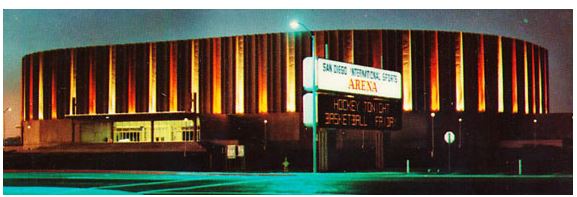
The letter comes in the weeks leading up to the report’s presumed certification by the council members, which would pave the way for the city’s sports arena real estate in the Midway District to be remade with thousands of apartments and a new entertainment venue.

The letter was written by Kathryn Pettit, an attorney with Chatten-Brown Law Group, on behalf of her clients, J. Keith Behner and Catherine Stiefel of Point Loma. The couple hired the law firm, as well as a traffic engineer, during the environmental review process to study the documents as they became increasingly alarmed about the project’s long-term implications for congestion, Behner told the Union-Tribune.

Continue Reading Lawyer Claims Environmental Analysis of Midway Rising Flawed; Residents Destined to Gridlock; Taxpayers to Pay for Project Infrastructure

Tax on San Diego’s Empty Second Homes Goes to June Ballot

 Source  March 4, 2026  26 Comments on Tax on San Diego’s Empty Second Homes Goes to June Ballot

By Lori Weisberg / San Diego Union-Tribune / March 4, 2026

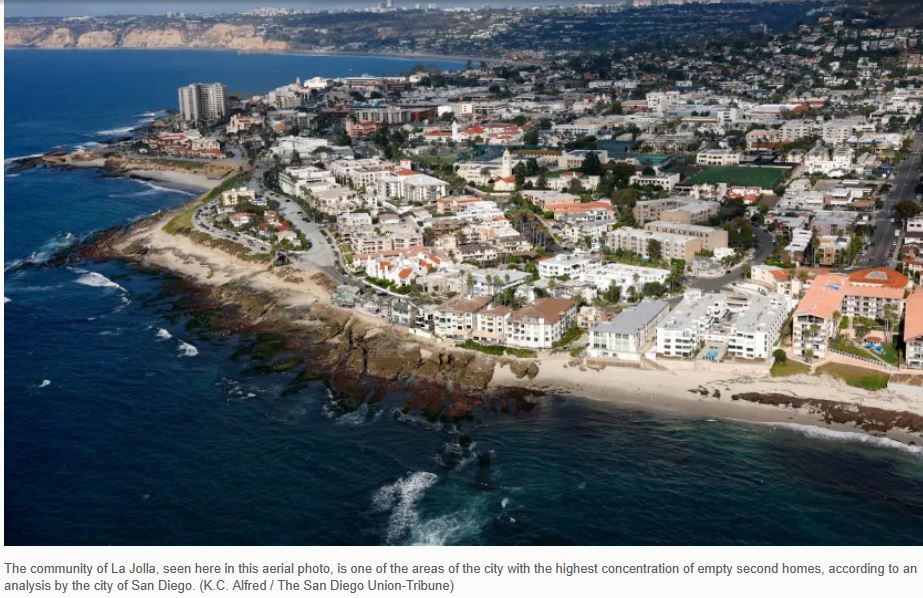
In a near-unanimous decision, the San Diego City Council agreed Tuesday to let voters decide whether a hefty tax should be imposed on thousands of second homes that are sitting empty most of the year.

The proposal, which will appear on the June ballot, is a divisive one and drew scores of people on both sides of the issue eager to voice their feelings on a tax that council members believe will be a key step forward in expanding the supply of rental and for-sale housing in San Diego.

The “empty homes tax,” as it is being called, would impose an initial annual tax of $8,000 on more than 5,000 homes unoccupied for more than half a year — plus a $4,000 surcharge for corporate-owned dwellings. In subsequent years, the tax would rise to $10,000, with the surcharge increasing to $5,000.

It is the brainchild of Councilmember Sean Elo-Rivera, who just a month ago failed to win support from his colleagues for a far broader measure that would have also taxed whole-home short-term rentals.

Continue Reading Tax on San Diego’s Empty Second Homes Goes to June Ballot

SOHO: Package A Advances — Now So Does the Fight

 Source  March 4, 2026  3 Comments on SOHO: Package A Advances — Now So Does the Fight

From SOHO / March-April 2026 Newsletter

San Diego’s historic districts and individually designated resources are not abstract planning concepts. They are neighborhoods, cultural landscapes, and places that tell the story of our region and its people. Once protections are weakened or removed, the impacts are often permanent. That is why careful environmental review and adherence to adopted community plans are essential.

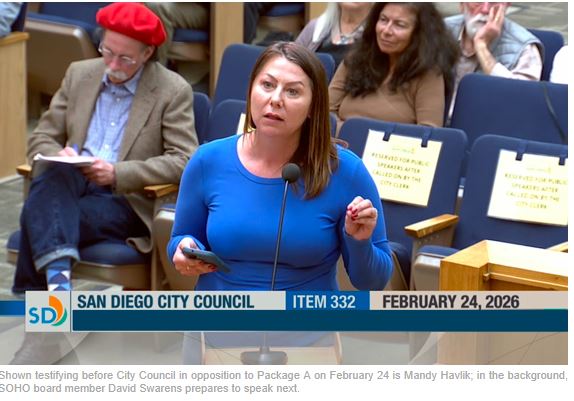
On February 24, 2026, the San Diego City Council voted to approve the so-called “Preservation and Progress Package A,” following extensive public testimony in opposition, and repeated warnings regarding the measure’s violations of law. Environmental review and preservation safeguards exist to prevent irreversible harm to historic neighborhoods. The Council chose to ignore those safeguards.

Many San Diegans left City Hall that day disheartened, not because preservation lost a political fight, but because the Council chose to advance destructive changes to our historic preservation ordinance without the environmental review and public accountability the law requires.

Citywide opposition was overwhelming. Since the City released the Preservation and Progress initiative, over 600 written comments were submitted, with roughly 12 to 1 opposed. Twenty-eight community planning groups voted no, along with 12 city wide historic organizations. The City’s own Historical Resources Board rejected it twice, in two separate votes. Preservation organizations representing thousands of residents across San Diego urged caution, transparency, and lawful process.

Yet Package A passed. Council President Joe LaCava acknowledged the breadth of public concern and voted against the measure. The remaining members present, who numbered only 5, as a third of the council was missing in action, voted in favor.

Continue Reading SOHO: Package A Advances — Now So Does the Fight

Why Did These Americans Have to Die? The White House Still Doesn’t Know.

 Frank Gormlie  March 4, 2026  2 Comments on Why Did These Americans Have to Die? The White House Still Doesn’t Know.

No one still knows  why these 4 American servicemembers had to die. Trump doesn’t know. Hegsleth doesn’t know. Rubio doesn’t know.

They were killed in an Iranian drone strike on Sunday, March 1.

Yet, here they are – as the Pentagon has identified them of the six US service members who have died. The multiple reasons that Trump and gang have given for attacking Iran since it all began have varied with the time of day and night. From “regime change” to wiping out missiles they don’t have, or to making the first strike before they did ….Trump still hasn’t addressed the nation on the widening war. 

CNN:

The soldiers are Capt. Cody Khork, 35; Sgt. 1st Class Noah Tietjens, 42; Sgt. 1st Class Nicole Amor, 39; and Sgt. Declan Coady, 20. All four were assigned to the 103rd Sustainment Command, an Army Reserve sustainment unit out of Iowa.

The two other soldiers who were killed in the strike on Sunday have not yet been identified.

CNN first reported that the suspected drone strike hit a temporary tactical operations center at the port of Shuaiba in Kuwait on Sunday. At the time of their deaths the soldiers were serving with 1st Theater Sustainment Command.

A source familiar with the situation described the operation center as a triple-wide trailer with office space inside; the building was surrounded by concrete barriers that are typically used to protect military structures overseas from things like car bombs and improvised explosive devices. However, there was nothing overhead that could shield the building from drones or missiles.

Continue Reading Why Did These Americans Have to Die? The White House Still Doesn’t Know.

Small Crowd, Big Issues at OB Planning Board Meeting

 Staff  March 4, 2026  0 Comments on Small Crowd, Big Issues at OB Planning Board Meeting

Historic District at Risk, Seawall Debate, and a Call for a “Seat at the Table”

By Jillian Butler

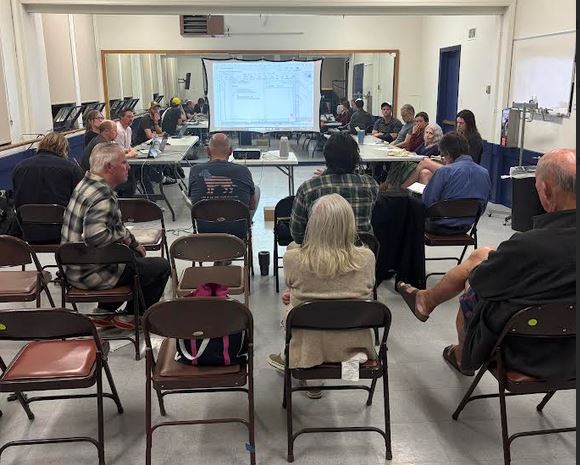
March 3rd, 2026–The Ocean Beach Planning Board met Tuesday night, March 3, at the Ocean Beach Recreation Center on Santa Monica Avenue. Only seven residents attended in person, with a handful more joining via Zoom — a modest turnout for discussions that could significantly impact OB’s historic character and coastline.

Notably absent were representatives from City Council District 2, State Senator Akila Weber, Assemblymember Tasha Boerner Horvath, and County Supervisor Terra Lawson-Remer. In a meeting centered on preservation, development, and public safety, their absence did not go unnoticed.

Mayor’s Rep Catches Flak Over “Package A” Passage

Randy Reyes, representing Mayor Todd Gloria’s office, informed the board that City Council had passed Preservation Package A. The new policy could affect OB’s  Emerging Cottage Historic District — potentially making it harder for the district to qualify for historic protection.

Continue Reading Small Crowd, Big Issues at OB Planning Board Meeting