

Category: Economy
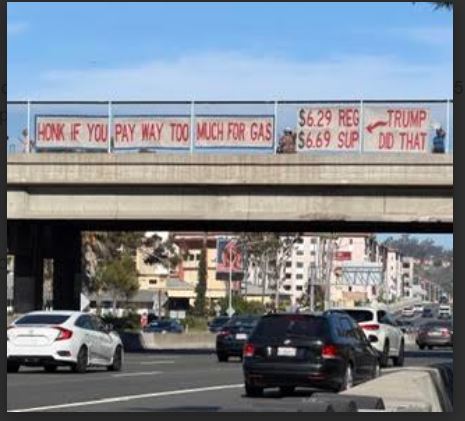 A group of eight or ten of us
The Piggly Wiggly in Ocean Beach Changed the Way Customers Shopped
 by Debbie Sklar / Times of San Diego / August 19, 2026
If you walked along Newport Avenue in Ocean Beach nearly a century ago, grocery shopping meant choosing among several neighborhood markets.
One of them had a name that was hard to forget.
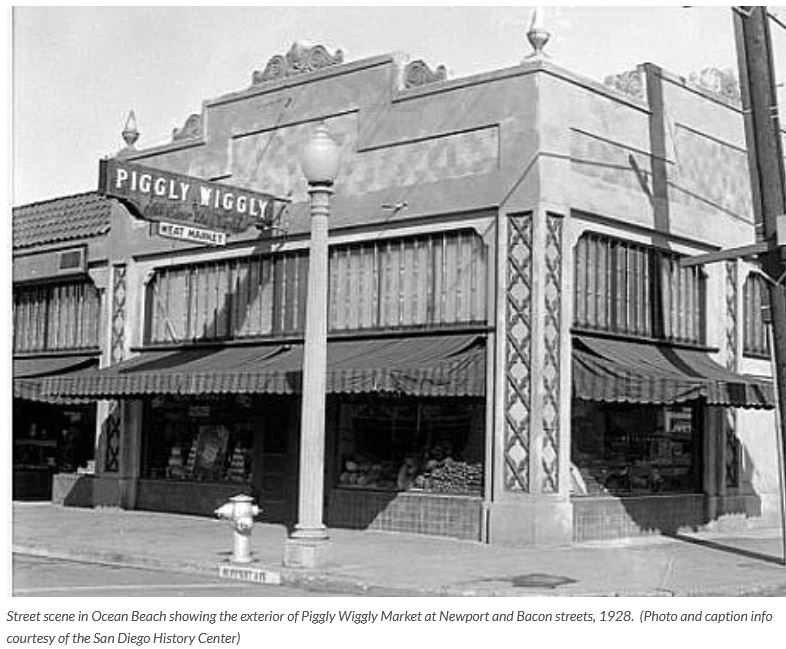
A photograph from the San Diego History Center shows the Piggly Wiggly Market at 5004 Newport Ave. [A liquor store sits at that corner now.] The storefront carries the name in large letters across the facade, while a sign below identifies it as a meat market. Produce fills the windows, and a Newport Avenue street sign stands near the curb.
The address is confirmed in San Diego’s historical records.
The 1941 San Diego city directory lists Piggly Wiggly of San Diego Inc. with a branch at 5004 Newport Ave. A 1941 advertisement also lists the Ocean Beach store, along with Piggly Wiggly locations in National City, La Jolla, Chula Vista, La Mesa, Coronado, Mission Beach and Escondido. The advertisement described the company as “100% owned and operated by San Diegans.”
A new way to shop
The Piggly Wiggly name was already associated with a major change in the way Americans bought groceries.
‘Let Them Steal Cake’

By Joni Halpern
When I was a kid
Know what I did?
I stole things.
Things like penny candy, cookies
cake and ice cream.
My mom would get angry.
My dad would yell and scream.
But I would get hungry.
So when I was a kid,
know what I did?
I stole things.
—Olen Purnell, 1976
When I was a kid, there were no food stamps. My dad was a working man, a carpenter who worked six days a week, but still could not buy enough food for his children.
Oh, he tried. He shopped sales, bought off-brands, made deals with the local grocer to buy the rough outer lettuce leaves that were trimmed before the tender heads were set out for customers. He bought moldy cheese removed days earlier from the dairy display. He measured our milk by the mouthful so it would last longer, until by the third week of the month, it was sour. We still drank it. He scoured the rural areas outside our town to pick up lugs of damaged fruit and vegetables that couldn’t be sold at market. Meat was scarce.
The Overdevelopment of Clairemont Mesa and Kearny Mesa
 By Robert Welsh
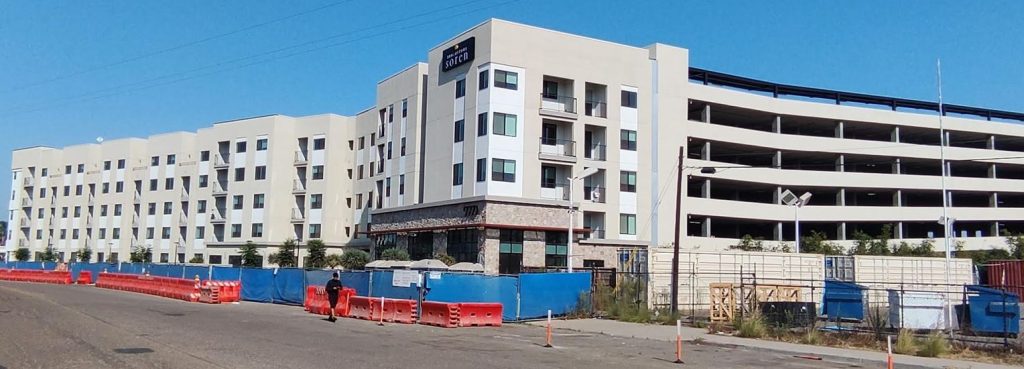
Here is a quote from the City’s Clairemont Community Plan, dated 1989: “In summary, Clairemont Mesa is an urbanized community and for the most part is built out.” It must be said, that Clairemont has not gotten less “built out” in the 37 years since then.
Recently I was in a discussion about excessive apartment building development in Clairemont Mesa, noting 8 locations where significant developments had been completed, were under construction or were planned. I decided to visit each location in person, to get a first-hand view, and these are my observations.
I was both surprised and shocked with what I found.
 I was surprised to find that 2 of the notorious cul-de-sac ADU builds (12 units @ Shoshoni, and 17 units @ Almayo) did not look as awful from the front as they did while under construction. You might easily drive by them without noticing the depth of their development, from front-to-back. Of course, you wouldn’t be driving past them because they are both in cul-de-sacs, and the parking problems are obvious and extreme. There simply is no parking for these locations.
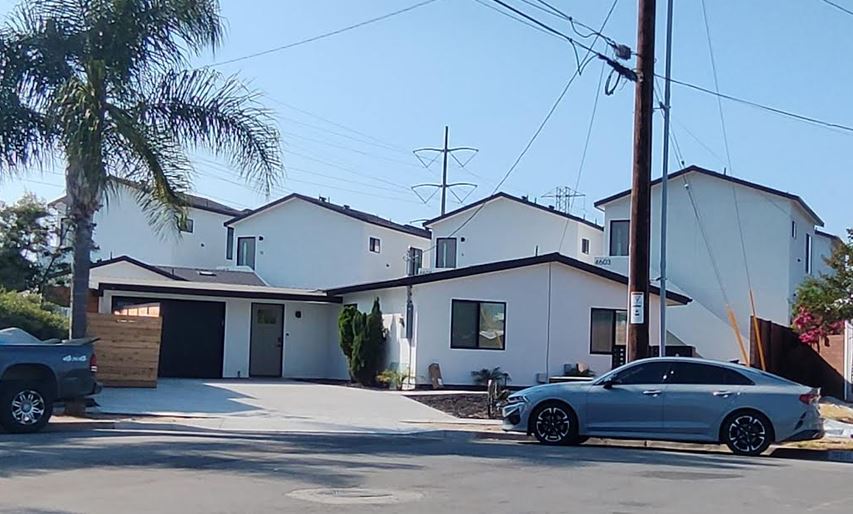
I was shocked to see how many smaller (4-8 unit) ADUs existed or were under construction around Clairemont ! Unless you drive around and look, you will not fathom the incredible amount of construction that has been or is being undertaken.
My focus here will be on the large builds.
Richard Bailey Wants to Cut Cops, Fire Fighters and Other Critical San Diego City Workers
 Bailey says the city should ‘return to 2015 staffing levels’ by cutting 1,054 employees and the services they provide.
By Michael Zucchet Voice of San Diego
City Council candidate Richard Bailey continues to promise budget fantasyland to San Diegans. He says the answer to San Diego’s persistent budget shortfalls includes no new fees, no increased taxes, and no service cuts whatsoever – in fact he claims that somehow service levels will magically improve – if we simply “return to 2015 staffing levels” in the city of San Diego.
Bailey moved to San Diego last year, changed his political party affiliation this February, and within days announced that he was running for City Council. Since then, and again last week in an interview with NBC’s “Politically Speaking,” he has repeatedly claimed that if we just “return to 2015 staffing levels,” the city’s general fund budget will swing from what he says is a $100 million annual deficit to more than a $300 million surplus with “no need to cut any services.”
City Says New OB Pier Replacement Project Is in ‘Permitting and Environmental Review Phase’
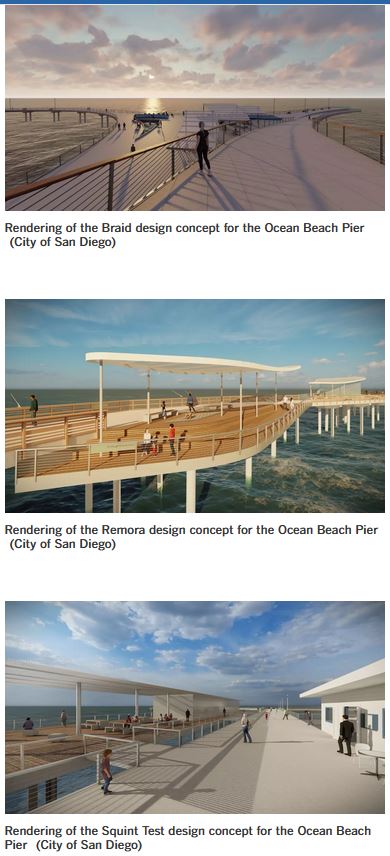 Editordude: Thanks to reporter Dave Schwab and the Times of San Diego, we have an update on what’s happening with the OB Pier replacement project. It’s been nearly a decade since the Rag broke the story that the pier had reached the end of its service life. (They call it the OB Pier “Renewal Project”, but that sounds like the current pier will simply be “renewed.” Not so, as the current pier needs to be “replaced.”)
By Dave Schwab / Times of San Diego / August 18, 2026
Given the city’s existing budget crunch, residents and business owners have been asking if the Ocean Beach Pier Renewal project has been put on the back burner until the next city administration takes office in 2028 or the budget rights itself.
The city says no.
“The Ocean Beach Pier Renewal project is still in the permitting and environmental review phase,” said senior city spokesman Tyler Becker. “Given the scale of the project, a comprehensive Environmental Impact Report is required under the California Environmental Quality Act, which can typically take anywhere from two to five years, depending upon the findings and potential impacts.”
Planning for a new replacement pier has been ongoing for about 3 ½ years starting in early 2023, when the city began formal public workshops and concept development. However, initial structural studies pointing to the end of the pier’s service life began eight years ago in 2018, when consultants determined continually repairing it would cost more in the long run than replacing it.
City Hall Is Still Failing Balboa Park. It’s Time for a Change.
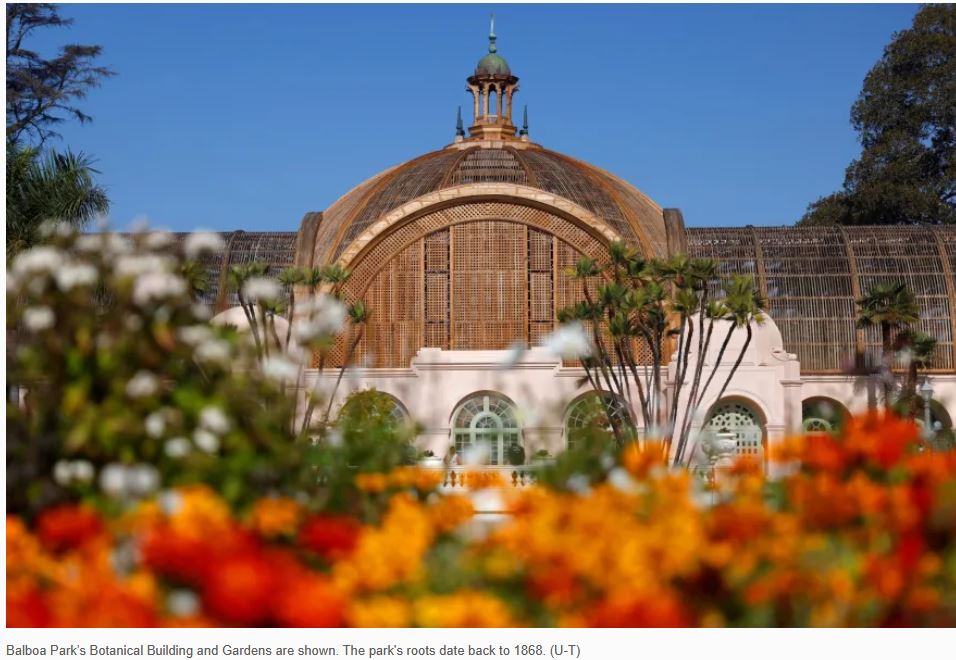 By Kate Callen / San Diego Union-Tribune Commentary / August 16, 2026
The city’s decision to restore free parking in Balboa Park has silenced public demands for a change in park governance. The sense of urgency has abated. But the reality of park mismanagement hasn’t.
City Hall still has total control over park administration. It can keep shirking its responsibility to perform adequate maintenance. And it can always seek new ways to tap the park for cash.
Right now, the issue of park governance is in a holding pattern. It has been placed on the docket of the 2026-2028 Balboa Park Master Plan Update. This periodic assessment identifies park priorities, like capital projects and infrastructure upkeep, that the city isn’t likely to have the money to support.
The original 1989 Master Plan Update was highly aspirational. Some of its recommendations, like park tram service, were adopted. Others, like a pedestrian bridge between Golden Hill and Inspiration Point, were not.
San Diego shouldn’t need a political fight to keep bathrooms open
 by Raul Campillo / Times of San Diego / Aug. 15, 2026
From the moment Mayor Todd Gloria proposed closing public restrooms at Mission Bay Park as part of this year’s budget cuts, I opposed the idea. San Diego faced a difficult budget year. I ultimately voted for the city’s balanced budget, but I made clear during the budget process, twice, that I did not support closing Mission Bay restrooms.
Cities have to get the basics right: clean streets, safe neighborhoods, smooth roads and parks people can actually use — which means open public restrooms. A restroom is not a luxury in a public park. For families with young children, seniors, people with disabilities, pregnant women, workers and tourists, access to a restroom can determine whether they comfortably and safely use that park at all.
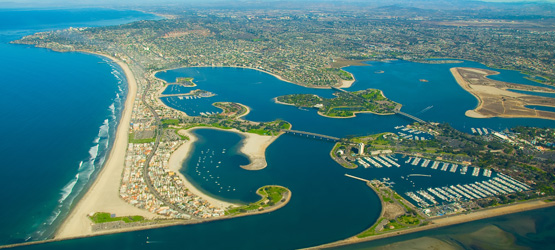
Mission Bay receives an estimated 15 million visitors each year. Closing 13 out of its 28 public restrooms was a dramatic service reduction at a beloved public space and one of our economy’s most important tourist attractions.
That is why, on July 15, I sent Gloria a memorandum identifying $1.8 million that had been recently freed up. I proposed using less than a third to reopen and maintain the Mission Bay restrooms.
On July 24, the mayor rejected my proposal. He emphasized that the $1.8 million consisted of one-time resources and argued that the city lacked sufficient ongoing funding to sustain existing service levels.
Latest ICE-Capades in San Diego
 By Michael Angelo
On day one of the second Trump administration, a flurry of executive orders were signed reshaping immigration enforcement in the country by declaring a national emergency at the southern border, redirecting military funds for border enforcement, and restricting asylum access to anyone engaged in a so-called invasion of the United States.
U.S. Immigration and Customs Enforcement (ICE) was also directed to immediately and aggressively escalate operations and surge arrests by establishing high daily quotas which management would be held accountable for missing (increasing the likelihood of non-criminal arrests).
Just shy of 600 days later, we can see the direct and harrowing results of these actions. A recent ACLU research report titled Agents of Chaos and Cruelty documents the widespread violation of civil rights being committed by ICE agents during the second Trump administration’s first year. Across eight states, the report found more than 400 of the over 1,200 ICE incidents examined involved misconduct by agents. The report also emphasizes no one was off limits, and found dozens of instances of agents detaining U.S. citizens, asylumsees, and people with disabilities.
 Agents were also reported to have “targeted, used force and intimidation against, and arrested” legal/ community observers, protesters, journalists, elected officials and their staff, and even members of the clergy. This cruelty has resulted in the killing of at least seven people during enforcement operations including 23 year-old Colombian immigrant and father Johan Sebastian Duran Guerrero, whose car was allegedly rammed by agents before he was fatally shot through the windshield a little over a month ago, and 37 year-old intensive care nurse Alex Pretti, who was shot multiple times and killed by ICE agents back in January.
At the end of May, the Rag published an article titled ICE Capades in San Diego, compiling actions taken by ICE in recent months to explore how the agency has been conducting itself in America’s Finest City. Here is an update on recent events and articles involving ICE in San Diego:
 Chaotic scene unfolds around Federal Agents in City Heights
BREAKING NEWS: Mayor Gloria Finds Money to Re-Open Mission Bay Restrooms by End of the Week
 Mayor Todd Gloria and other city leaders Wednesday announced the bathrooms at Mission Bay Park that were closed in early July due to budget constraints will reopen at the end of this week.
Gloria said 13 restrooms at one of the city’s most popular destinations will be back open starting Friday. He told the media that money from a state grant award and allocations from council office budgets is helping reopen the bathrooms.
The bathrooms will stay open until the end of the year, according to the mayor.
City Wants ‘Public Input’ on Establishment’s Mid-City Communities Plan Update: 30K More Homes, 89K More Residents Over 30 Years
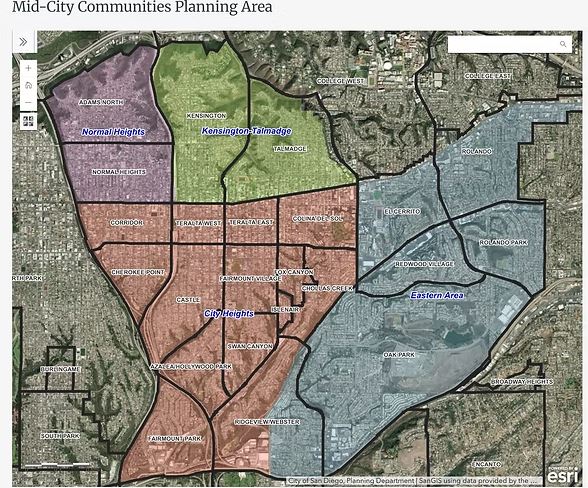 Editordude: Here’s a rather bland report from KPBS — full of bias — about how the city of San Diego wants the public’s input on the establishment’s new blueprint for the Mid-City communities plans updates. The draft calls for 30,000 more homes and 89,000 more residents over 30 years (see CBS8 report at end). There’s no mention of how activists from these Mid-City neighborhoods have resisted and opposed these updates over the last couple of years, or how the Planning Commission rode roughshod over their attempts to get the city planners to listen to their deep seated concerns.
City News Service – KPBS / August 11, 2026
San Diegans are being asked to provide input on an update to the Mid-City Communities Plan draft released Monday, which would create capacity for an additional 30,000 homes over the next 30 years.
The update — the first of its scale for the area in 25 years — took two years to shape, featuring engagement with more than 3,000 city residents participating in more than 100 events and resulting in more than 9,300 comments.
Mid-City includes the neighborhoods of City Heights, Eastern Area, Kensington-Talmadge and Normal Heights.







Recent Comments