Category: Civil Rights

The City’s Higher Density Vision For Clairemont
 Source  August 21, 2025  3 Comments on The City’s Higher Density Vision For Clairemont

By Tanja Kropf / Explore Clairemont / August 19, 2025

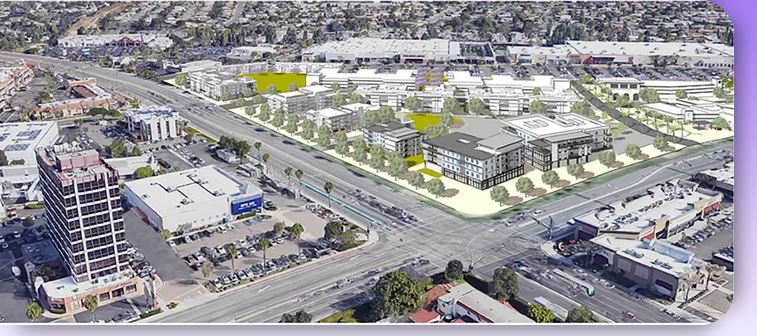
If the City of San Diego has its way, the single-family home landscape that has been a part of the fabric of Clairemont for decades is about to dramatically change.

On August 4, city planners unveiled their proposed 30-year plan for Clairemont at the Clairemont Community Planning Group (CCPG) meeting. The 101-page document was released to the public less than two hours before the meeting.

The new Clairemont Community Plan proposes up to 17,100 additional residences and a more urbanized ‘City of Villages’ neighborhood design where commercial, retail, and residential units will share higher density spaces.

Additionally, the 30-foot height limit the City Council adopted in 1989 for most of Clairemont will go away. This will clear the way for, at a minimum, 65-foot height limits in certain areas.

The elimination of height limits aligns with California Senate Bill 79. SB 79 would override current single-family zoning restrictions in favor of multi-family residential developments (condos, apartments). The bill would allow buildings up to 95 feet high in areas with access to transit within a half mile (as the crow flies).
Continue Reading The City’s Higher Density Vision For Clairemont

OB and Point Loma Residents Want City to Deny Permit for 30-Foot ‘Faux’ Cell Tower at Collier Park

 Source  August 21, 2025  2 Comments on OB and Point Loma Residents Want City to Deny Permit for 30-Foot ‘Faux’ Cell Tower at Collier Park

by Dave Schwab / Times of San Diego / Aug. 20, 2025

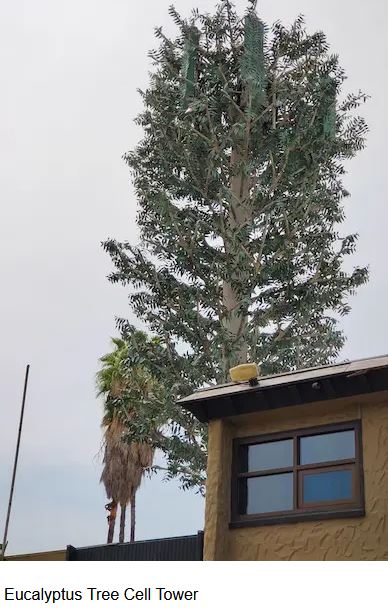
Some residents are pushing back at plans by AT&T to install a 30-foot “faux eucalyptus” cell tower with 12 antennas, 9 radio units and a large ground equipment box.

Those opposed to the proposal, at 2315 Soto St. on public land in Collier Park, have requested that the city deny a conditional use permit for it in its fenced-off area. They’re arguing that public land is inappropriate to build a new cell tower on, disguised or not, contending it should be used for another purpose.

Disguising cell towers as trees, often eucalyptus or other types, helps them blend into the landscape, making them less noticeable and reducing the feeling of visual clutter. Faux trees are primarily used to address public concerns about visual pollution and to make towers more acceptable in residential areas.

These disguises help mitigate the aesthetic impact of cell towers, which can be perceived as eyesores, especially in areas where they might clash with the surrounding environment.

Eric Law, chair of the Peninsula Community Planning Board, speaking for himself, said residents oppose the cell tower project for a number of reasons, not the least of which is that some view Collier Park as a sacrosanct recreational community resource.

Law noted AT&T, a publicly traded company, not a public utility, is seeking to upgrade its 5G telecommunications system in the area.

Continue Reading OB and Point Loma Residents Want City to Deny Permit for 30-Foot ‘Faux’ Cell Tower at Collier Park

To Create Abundant Housing, Ignore the YIMBY Playbook

 Source  August 20, 2025  5 Comments on To Create Abundant Housing, Ignore the YIMBY Playbook

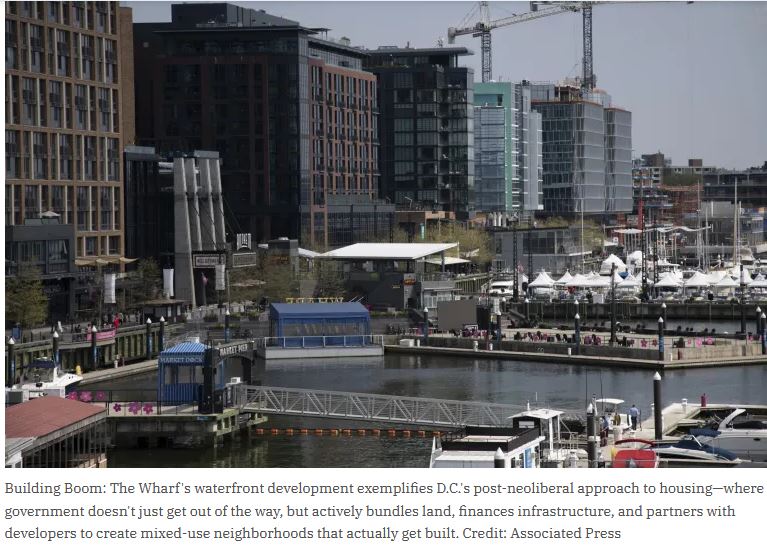
Washington DC, America’s bluest city, is building more homes per capita than Houston—not with bottom-up zoning reform but with top-down government action.

by Brian Shearer / Washington Monthly / August 14, 2025

Since Ezra Klein and Derek Thompson’s book Abundance was published, the policy world has debated the causes of our current housing supply drought. Abundance argued that zoning laws are the culprit, as part of its broader thesis calling for liberals to embrace a policy vision oriented around building more of what we need (i.e., “abundance”) primarily through targeted deregulation of private industry and de-proceduralization of government.

Other analysts believe that it is consolidation in the housing market that slows development. But both camps aim to expand housing supply, and solutions are not always derived from the causes of the problem. Cancer isn’t caused by the absence of chemo drugs or radiation, but that is often the treatment. Instead of debating causes, focusing on what policy solutions work best might be a better approach.

Continue Reading To Create Abundant Housing, Ignore the YIMBY Playbook

Rachel Maddow: ‘Three ways Trump is already trying to rig the midterms’

 Source  August 19, 2025  1 Comment on Rachel Maddow: ‘Three ways Trump is already trying to rig the midterms’

If Trump is taking tactical advice from Putin about how to hold an election, that doesn’t bode well for the future of American democracy.
This is an adapted excerpt from the Aug. 18 episode of “The Rachel Maddow Show.”

By Rachel Maddow / MSNBC / Aug. 19, 2025

On Monday, dozens of people turned up in Austin, Texas, to cheer on Democrats as they returned to the state amid a huge national fight over redistricting.
Texas has been at the center of an extraordinary demand by Donald Trump that Republican-controlled states, like Texas, draw new congressional maps and effectively guarantee GOP control of Congress for years to come.

It’s not just Texas. Vice President JD Vance flew to Indiana earlier this month to put pressure on the Republican governor there to alter that state’s maps for the Republicans. Politico reported that the White House has been in talks with Republicans in Missouri, New Hampshire, South Carolina and Florida to change their congressional maps as well.

That’s one way Trump’s trying to rig the midterms – by demanding changes to congressional district maps to make it structurally impossible for Democrats to control Congress again.

Continue Reading Rachel Maddow: ‘Three ways Trump is already trying to rig the midterms’

Controversial Senate Bill 79 Sparks Debate Over Housing and Local Control in California

 Source  August 19, 2025  1 Comment on Controversial Senate Bill 79 Sparks Debate Over Housing and Local Control in California

By Neighbors for a Better California Board

Sacramento, CA – Senate Bill 79, a contentious piece of legislation aimed at increasing housing density near transit stops across California, has ignited fierce debate among lawmakers, local governments, and community advocates. While the bill seeks to address the state’s housing crisis by mandating up-zoning within a quarter to half-mile of transit hubs, critics argue it undermines local governance, threatens affordable housing, and risks displacing vulnerable communities.

Introduced to boost housing supply near transit corridors, SB 79 categorizes areas into tiers, allowing building heights of 45 to 75 feet, and a 20-foot bonus when immediately adjacent to a transit stop. Moreover, additional density bonuses already in state law can be stacked and allow the developer to double these heights and density. Neighbors For A Better California (NFABC) analysis of the bill’s amendments reveal significant concerns about its clarity, affordability mandates, and impact on lower-income neighborhoods.

One major criticism is the bill’s vague language regarding bus routes, which critics describe as “convoluted” and prone to loopholes. This lack of precision could allow developers to exploit ambiguities, undermining the bill’s intent.

Continue Reading Controversial Senate Bill 79 Sparks Debate Over Housing and Local Control in California

Encanto’s ADU Push Risks Quality of Life Without the Basics

 Source  August 18, 2025  11 Comments on Encanto’s ADU Push Risks Quality of Life Without the Basics

By Francine Maxwell

San Diego’s push to add density through ADU incentives has landed hardest in Encanto — and the consequences are becoming concrete. A private developer-driven proposal to place 24 ADUs on the basketball court site in front of the Boys & Girls Club on Imperial Avenue (branded online as “Lisbon Vista Village”) is the latest example. That proposal arrives in a neighborhood already reporting serious infrastructure and parking stress, and without a public plan to add basic retail like a grocery store to serve new residents.

Facts on the table:

  • Multiple news reports and community meetings show that Encanto has become a focal point for large bonus-ADU projects — scores of units proposed on a small number of parcels across the neighborhood.
  • The City has been actively reconsidering the ADU Bonus Program and “Footnote 7” (the code provision that changed lot-size rules for southeastern neighborhoods), with council action and planning reports in 2025.
  • Local residents have raised consistent concerns about traffic, parking capacity, stormwater/ infrastructure impacts, and loss of open recreational space — including the potential loss of the basketball court used by youth at the Boys & Girls Club.
Continue Reading Encanto’s ADU Push Risks Quality of Life Without the Basics

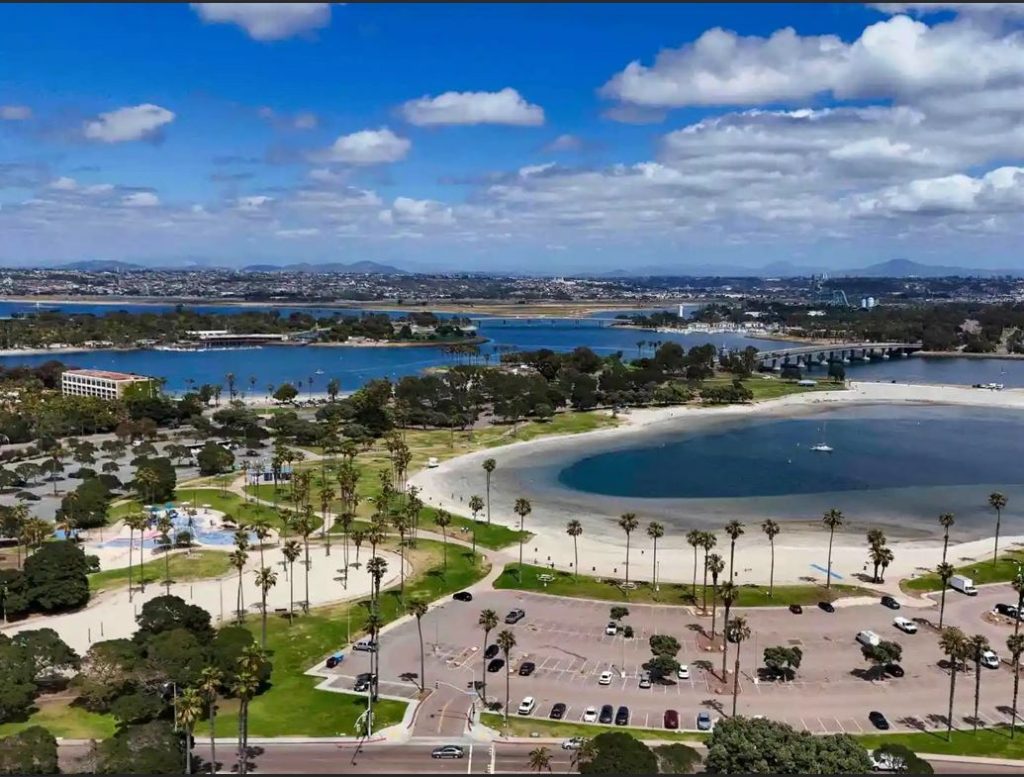
Mission Bay Park Is Not ‘Surplus’ Land — UT OpEd by Donna Frye

 Source  August 18, 2025  7 Comments on Mission Bay Park Is Not ‘Surplus’ Land — UT OpEd by Donna Frye

By Donna Frye / Op-Ed San Diego Union-Tribune / August 15, 2025 

Mission Bay Park is one of the most magical and wonderful places in our city. I remember in the late ‘50s asking my dad what the boats were doing in Mission Bay and he said they were dredging it to make parkland for all of us.

In 1962, when Mission Bay Park was dedicated as public parkland in perpetuity, I asked my mom what the word “perpetuity” meant and she told me it means “forever”.

So imagine my reaction after reading a story in the OB Rag last month that said the city wanted to declare parts of Mission Bay Park as “surplus” land. Let’s just say the words coming out of my mouth reminded me of a recent sticker that read, “Mermaid Soul, Pirate Mouth, Always Salty”.

I could not understand how or why anyone with any common sense would want to declare any portion of Mission Bay Park as “surplus” land so I started doing a bunch of research.

Continue Reading Mission Bay Park Is Not ‘Surplus’ Land — UT OpEd by Donna Frye

San Diego Housing Push Driven by Greed and Power — and Beware of Senate Bill 79

 Source  August 15, 2025  4 Comments on San Diego Housing Push Driven by Greed and Power — and Beware of Senate Bill 79

By Patty Ducey-Brooks / Presidio Sentinel /  July 9, 2025 

In US History, tenement housing referred to multi-family dwellings, often poorly constructed and overcrowded, that housed working-class families, particularly immigrants, in late 19th and early 20th century urban areas. These buildings were characterized by cramped living conditions, inadequate ventilation, and contributing to urban poverty.

Though the “affordable housing” structures that are being built today in San Diego may have a larger footprint, they do not provide adequate outdoor recreation facilities, parking and the infrastructure to make them desirable or beneficial to families and children. They are also not affordable, renting at $2,878 (including utilities) for a one-bedroom unit.

We have recently learned that there is a trio operating in San Diego who are driven to build big and tight and have taken advantage of the elderly who are one of their primary targets for home sales.

Continue Reading San Diego Housing Push Driven by Greed and Power — and Beware of Senate Bill 79

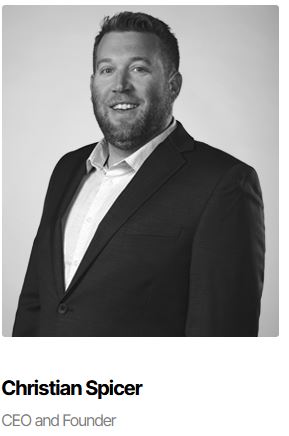
Just Who Is Christian Spicer, ‘King of San Diego’s Mega-ADU Projects’?

 Frank Gormlie  August 15, 2025  21 Comments on Just Who Is Christian Spicer, ‘King of San Diego’s Mega-ADU Projects’?

By Frank Gormlie
Roughly a week and half ago, on Monday, August 4, dozens of Pacific Beach residents crowded onto a patch of sidewalk in a northeast portion of their community, holding signs and banners — all condemning a huge, mega-ADU project called Chalcifica — that called for over 100 units packed into two neighboring residential lots.

The PB residents and their supporters were there as their lawyer proclaimed a lawsuit against Chalcific’s developer, a man named Christian Spicer, and his firm SDRE.

SDRE wants to build six three-story apartment buildings with only 70 parking spaces for 116 units.The protesters — and the sponsoring group called Neighbors for a Better Pacific Beach – have a multitude of concerns; that the mega-project will pack street parking, endanger the environment and sit on the site of a culturally significant Kumeyaay village.

The lawyer filing the suit, Josh Chatten-Brown, spoke to the crowd. “Make no mistake: These are not simple granny flats. They are large investor apartment complexes masquerading as accessory units designed to exploit the ADU laws for profit and to sidestep the public oversight that such a development demands.”

So, just why were dozens of neighbors and Kumeyaay tribal members at that protest Monday and just who is the complex’s developer, Christian Spicer?

First of all, the neighbors’ chief concern is that the complex is too large for a residential neighborhood’s infrastructure, plus they’re worried the mega-project will overwhelm the neighborhood’s streets and fire evacuation routes, leading to traffic, packed parking and increased risk in an area designated as a very high fire hazard zone.

SDRE plans to build parking spaces for only about half of Chalcifica’s proposed units, for under current city law, developers aren’t required to build extra parking for backyard projects if they’re located within a half-mile of public transit, which includes Chalcifica. The area is already plagued by bottlenecks, congestion and few entrances — all things Chalcifica will worsen when it adds over 100 more residents.

Tribal members were there that day at the protest because they believe Spicer will develop Chalcifica upon untouched, sacred tribal lands. Jesse Pinto, an elder with the Jamul Indian Village, called for the land to be preserved so Kumeyaay people can perform ceremonies and preserve any human remains there. “The city’s approval process is an insult to history and gravely offensive to Kumeyaay descendants,” said tribal law attorney Courtney Ann Coyle.

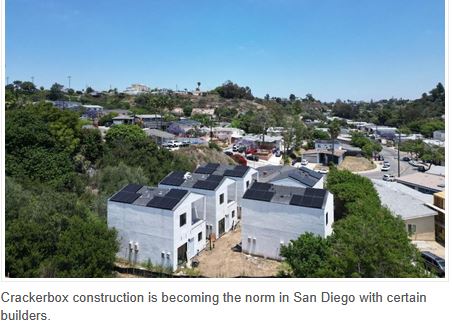
Secondly, Christian Spicer has made a name for himself recently in San Diego: “the King of ADUs”. Spicer and his investors are responsible for scores of large-scale projects that defy common understandings of what an accessory dwelling unit, or ADU, is supposed to be. His development team has spearheaded two separate projects that each put more than 100 ADUs on a single site, plus they’re responsible for several others with more than 20 ADUs each.

Continue Reading Just Who Is Christian Spicer, ‘King of San Diego’s Mega-ADU Projects’?

How San Diego Neighborhoods Are Fighting Back Against ICE

 Frank Gormlie  August 14, 2025  1 Comment on How San Diego Neighborhoods Are Fighting Back Against ICE

By Cesar F Hernandez / Op-Ed – San Diego Union-Tribune / August 14, 2025 

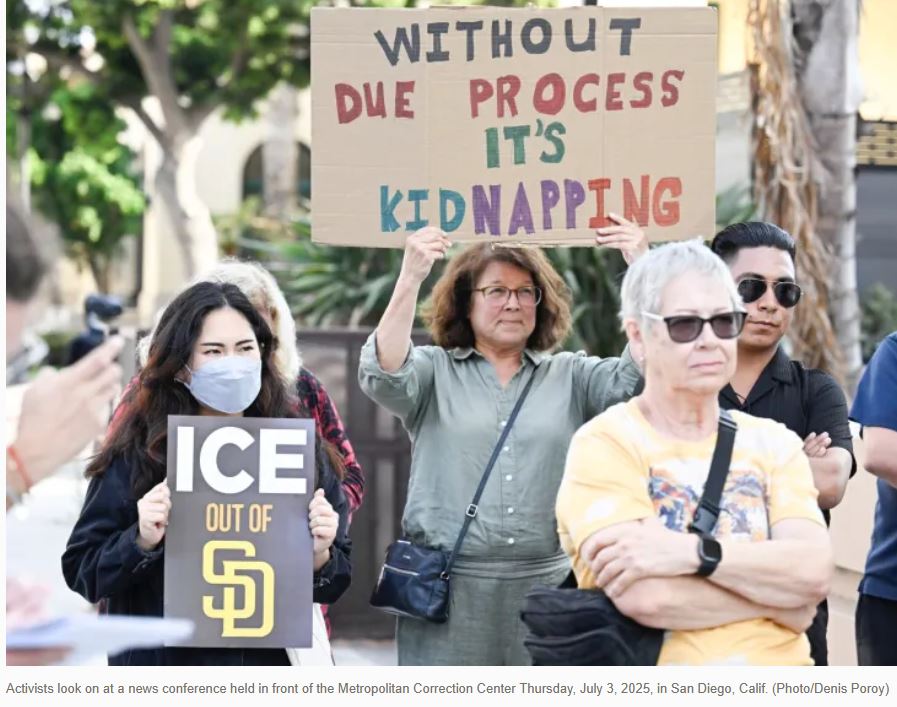
When my family was separated by U.S immigration policy in the late 1990s, we were overtaken by unimaginable grief and unrelenting pain. This experience grounds me as the organizing director at the ACLU of San Diego and Imperial Counties, working alongside others to build collective strength in the face of injustice. Lately, this pain has surged back, rekindled by the Trump administration’s cruel attacks on immigrant communities.

Politicians are pushing to end birthright citizenship and gut asylum protections. Due process, the cornerstone of justice, is cast aside. ICE storms workplaces and homes. It arrests parents outside courthouses, hospitals, even schools. Then there’s “Alligator Alcatraz,” an ICE detention center built in the Florida Everglades to dehumanize. Even the name carries the weight of lurking danger, a constant reminder that immigrants are being hunted.

I saw the reality of these vicious, inhumane policies and practices play out as I watched an interview of two Oceanside teenagers. At 6 a.m. on June 18, masked, heavily armed ICE agents shattered their windows, threw flashbangs into their home and pushed their way inside. The U.S.-born siblings were handcuffed. Both parents were arrested.

The trauma on the siblings’ faces was unmistakable. The 14-year-old daughter’s tears could have been mine. I felt her pain. It’s a pain that steals your voice and breaks your body.

Continue Reading How San Diego Neighborhoods Are Fighting Back Against ICE

Washington Post: Pentagon Plan Would Create Military ‘Reaction Force’ for Civil Unrest

 Source  August 14, 2025  1 Comment on Washington Post: Pentagon Plan Would Create Military ‘Reaction Force’ for Civil Unrest

By Alex Horton and David Ovalle / Washington Post / August 12, 2025

The Trump administration is evaluating plans that would establish a “Domestic Civil Disturbance Quick Reaction Force” composed of hundreds of National Guard troops tasked with rapidly deploying into American cities facing protests or other unrest, according to internal Pentagon documents reviewed by The Washington Post.

The plan calls for 600 troops to be on standby at all times so they can deploy in as little as one hour, the documents say. They would be split into two groups of 300 and be stationed at military bases in Alabama and Arizona, with purview of regions east and west of the Mississippi River, respectively.

Cost projections outlined in the documents indicate that such a mission, if the proposal is adopted, could stretch into the hundreds of millions of dollars should military aircraft and aircrews also be required to be ready around-the-clock. Troop transport via commercial airlines would be less expensive, the documents say.

The proposal, which has not been previously reported, represents another potential expansion of President Donald Trump’s willingness to employ the armed forces on American soil. It relies on a section of the U.S. Code that allows the commander in chief to circumvent limitations on the military’s use within the United States.
Follow Trump’s second term

The documents, marked “predecisional,” are comprehensive and contain extensive discussion about the potential societal implications of establishing such a program. They were compiled by National Guard officials and bear time stamps as recent as late July and early August. Fiscal 2027 is the earliest this program could be created and funded through the Pentagon’s traditional budgetary process, the documents say, leaving unclear whether the initiative could begin sooner through an alternative funding source.

Continue Reading Washington Post: Pentagon Plan Would Create Military ‘Reaction Force’ for Civil Unrest

Donna Frye: City’s Response to Public Record Act Request for Mission Bay Park Surplus Land Issue

 Source  August 13, 2025  7 Comments on Donna Frye: City’s Response to Public Record Act Request for Mission Bay Park Surplus Land Issue

By Donna Frye

On August 11, I received notice from the city that records were available for public review for Mission Bay Park, specifically the documents related to declaring three properties surplus lands and the communications between the city and the state.

Here is the link to the City of San Diego’s Next Request for Request 25-5691. [ https://sandiego.nextrequest.com/requests/25-5691 ]

Many of the documents were not shared with the public at the Land Use and Housing Committee Special meeting on July 2, 2025, the City Council meeting on July 29 or the Mission Bay Park Committee meeting on August 5.

While some are duplicative of one another, they do provide a partial timeline and some answers as to how the decision was made to declare all three properties in Mission Bay Park “surplus land”. There are some time gaps in the emails.

I have reviewed the documents briefly but focused on the emails for now. I have not gone through all the attachments and the following are just my initial observations.

The documents show that the city made a request to the Department of Housing and Community Development (HCD)  seeking an exemption to the Surplus Land Act (SLA ) on April 8, 2025, through HCD’s online portal.

Continue Reading Donna Frye: City’s Response to Public Record Act Request for Mission Bay Park Surplus Land Issue