

Gloria Loyalists Attack Editordude, the Rag and Ocean Beach in Red-Baiting Rant Filled with Half-Truths and Hypocrises
A small group of Mayor Gloria loyalists have attacked Frank Gormlie –“Editordude” at the OB Rag, the Rag itself and Ocean Beach in a recently published book — as well as in online interviews.
Authors Jim Miller and Kelly Mayhew grouped a series of interviews of local San Diegans into a book published in 2025, which included interviews with three individuals who all disparaged the Rag and Gormlie. They include Doug Porter who Gormlie lifted from obscurity after a 30-year hiatus from San Diego into becoming an early writer for the online Rag, and Ricardo Ochoa, a local attorney whom Gormlie has never met and vice versa.
This clique of Gloriaistas has supported and endorsed the mayor over these last six or more years, despite any evidence that he has been worthy of their support, and have opposed those who are critical of the mayor — like Gormlie and the Rag. While the Rag supported Gloria’s opponents, like Democrat Barbara Bry and Geneviéve Jones-Wright (probably the most left-wing mayoral candidate in San Diego’s history), Miller and others dumped on those with the Rag.
The most inflammatory interview by Miller and Mayhew was with Gregg Robinson, a retired college professor, who went on a rant which attacked Gormlie and the Rag in a red-baiting, terrorist- baiting, defamatory screed, filled with lies, half-truths and hypocrisies. (In a 9-page rant, nearly a third was used to attack Gormlie and the Rag.)
For one example where Robinson personally attacked Gormlie, in the interview published online, Robinson without any proof accuses Gormlie of selling drugs at West Point — which Gormlie attended for a couple of years. This was a gross lie, which could be potentially actionable as defamation.
The charges of of red-baiting and worse stem from a series of accusations against Gormlie’s early history as a community organizer in Ocean Beach. Robinson accuses Editordude of being Weather Underground, a militant anti-war group that evolved out of the movements in the sixties and early seventies. Robinson uses the group’s name three times in an obvious attempt at smearing Gormlie. Many in those former movements understand what the group was, but Robinson plays on people’s fears and trepidation with hopes that people will equate the group as a domestic terrorist organization and then, nullify the community work Gormlie did, including launching the original OB Rag newspaper in 1971. This, then, is clearly red-baiting and an example of terrorist-baiting.
The disparagement of Gormlie and the Rag comes at a dangerous time in modern American history, as the Trump administration is going after journalists, progressive media, and attacking progressive groups like the ACLU, Southern Poverty Legal Center and the National Lawyers Guild. Not only that, but centrists Democrats are currently red-baiting Democratic Socialists who have been winning primary elections.
What’s going on here?
 >Editordude: We asked D2 candidate Nicole Crosby to send us a position paper and we’d publish it without edit (we also asked Richard Bailey the same) — but at this date, she has not. So, here is a lengthy statement from he
 By Paul Krueger
 by Greg Moran /
 A group of eight or ten of us
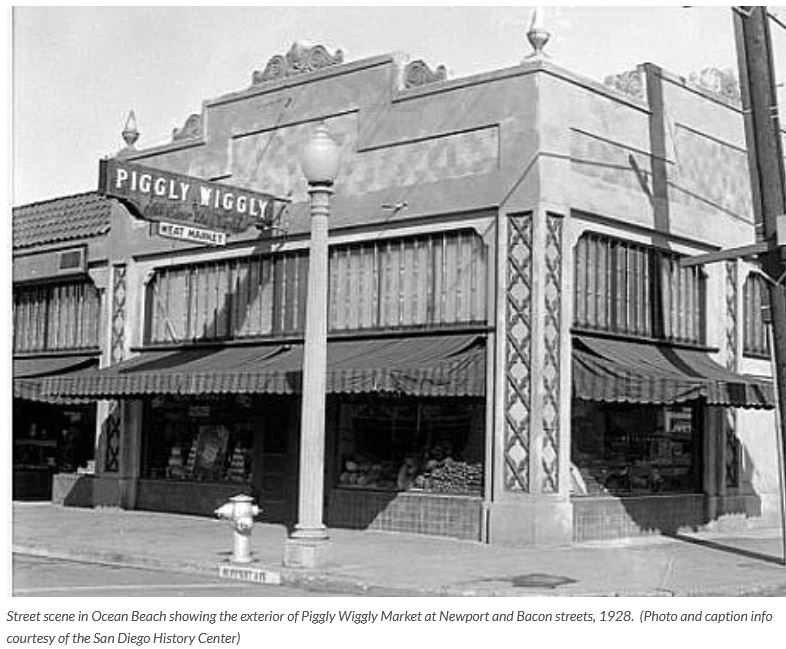 If you walked along Newport Avenue in Ocean Beach nearly a century ago, grocery shopping meant choosing among several neighborhood markets.
 By Angelo Haynes
 By Robert Welsh
 I was surprised to find that 2 of the notorious cul-de-sac ADU builds (12 units @ Shoshoni, and 17 units @ Almayo) did not look as awful from the front as they did while under construction. You might easily drive by them without noticing the depth of their development, from front-to-back. Of course, you wouldn’t be driving past them because they are both in cul-de-sacs, and the parking problems are obvious and extreme. There simply is no parking for these locations.







Recent Comments