Category: Environment

State Sen. Weber Pierson’s Midway Rising Theatrical Production

 Kate Callen  August 10, 2026  15 Comments on State Sen. Weber Pierson’s Midway Rising Theatrical Production

By Kate Callen

State Senator Akilah Weber Pierson’s August 9 “Community Conversation” about the Midway Rising `project was the first time in the Pechanga Arena’s 60-year history that it staged a Kabuki theater performance.

The first-term senator has become a pro-density rising star by authoring Senate Bill 958 to circumvent a state Supreme Court ruling that Midway Rising must adhere to a legal 30-foot height limit.

News that Weber Pierson was holding a public forum took the public by surprise. Was she genuinely interested in an honest discussion about overcrowding, traffic congestion, air pollution, loss of naturally occurring affordable housing, and flood risks from a rising water table?

Uh, no. Weber Pierson was interested in acting as if she cared about the opinions of community leaders who have those concerns. Maybe she thought that few people would turn out on a scorching Sunday morning. Maybe she hoped those who oppose her bill would be converted by the presentations of Midway Rising’s leadership team.

The resulting “community conversation” was a tightly orchestrated show with long stretches of developer hype, short bursts of community emotion, and quite a few surreal touches.

Weber Pierson began her opening remarks by saying, “I do want to mention that I did invite the mayor, but he was unable to attend.” Well, of course not. There was no ribbon to cut.

When boos erupted at the mention of Todd Gloria, Weber Pierson bristled. “I have been very accommodating so far,” she warned her guests. “This is going to be a productive conversation. We will not permit any further conduct that disrupts the peace. And if we don’t get that, then you will have to be removed.”

Her ominous tone explained why security men were circling the audience of fewer than 200 people.

Continue Reading State Sen. Weber Pierson’s Midway Rising Theatrical Production

2 Recent Reports on San Diego’s Bicycle Network Find Dangerous and Clogged Lanes, Key Gaps and Inadequate School Routes

 Frank Gormlie  August 7, 2026  9 Comments on 2 Recent Reports on San Diego’s Bicycle Network Find Dangerous and Clogged Lanes, Key Gaps and Inadequate School Routes

Two recent reports out on San Diego’s bicycle network find troubling problems with the hundreds of miles of bike lanes, from difficult and dangerous corridors, gaps in the infrastructure and insufficient bike routes for school kids.

One report from San Diego State University — the “State of the Ride”– published in May, ” identifies corridors for improvement and highlights how biking could feel safer for more communities, as UT writer Maura Fox reported August 5. She wrote that “San Diego’s expansive bicycle network remains difficult and sometimes dangerous for cyclists to navigate and contains key gaps that prevent continuous riding.”

The report was done in conjunction with the group BikeSD, whose executive director quipped:

“It’s not the question of, how many miles did we build? It’s more like, can an average child or a 70-year-old woman actually ride there?”

The report highlighted these issues, looking at what it says is the nearly 700 miles of bike facilities :

  • Only about 75% of the 2013 bike master plan’s goal for bike infrastructure has been implemented;
  • The most common type of facility — which accounts for nearly 60% of the mileage — are class II bike lanes, which are designated specifically for cyclists.
  • bike infrastructure is not distributed evenly across the city.
Continue Reading 2 Recent Reports on San Diego’s Bicycle Network Find Dangerous and Clogged Lanes, Key Gaps and Inadequate School Routes

When Old Town Was the Heart of San Diego

 Source  August 7, 2026  1 Comment on When Old Town Was the Heart of San Diego

by Debbie L. Sklar / Times of San Diego / July 29, 2026

Visitors walking through Old Town San Diego today see adobe buildings, historic plazas, museums, restaurants and shops celebrating the city’s earliest chapters.

But one of the most surprising facts about Old Town is that San Diego’s first major settlement and early city center was eventually the part of the city that people left behind.

Before downtown San Diego’s skyline, before the waterfront became the region’s commercial center and before the city expanded into a modern metropolis, Old Town was where much of San Diego’s early history unfolded.

Heart of the community
Following the establishment of the Spanish presidio and Mission San Diego de Alcalá in 1769, the area around the presidio developed into the region’s first major civilian settlement. During the Mexican period and the early years of American rule, it served as San Diego’s civic, commercial, and social center.

Continue Reading When Old Town Was the Heart of San Diego

Why SeaWorld Replaced Fireworks With Drone Shows: The Settlement and the Precedent

 Source  August 7, 2026  1 Comment on Why SeaWorld Replaced Fireworks With Drone Shows: The Settlement and the Precedent

By Philip Hernandez / Seasonal Entertainment / July 31, 2026

SeaWorld San Diego has no fireworks scheduled on any night in 2026. The park’s nighttime calendar now runs on the 600-drone Ocean of Dreams show …, a change that comes out of a Clean Water Act lawsuit: SeaWorld sought the drone pilot while the case was pending, and the settlement signed in May requires it to pursue drones as a permanent replacement for fireworks. Last summer’s Enchanted Wonders was the final fireworks season, closing a run local reporting puts at nearly six decades.

(Please go to the original for all the great links)

What the Settlement Requires
San Diego Coastkeeper and the Coastal Environmental Rights Foundation (CERF) sued SeaWorld in March 2025 over repeated noncompliance with the park’s Clean Water Act fireworks permit, documenting plastic, foil, sharp wiring, and toxic metal residues recovered from Fiesta Island and the Mission Bay seabed. The settlement, announced May 20, 2026, requires SeaWorld to pursue drones as a permanent replacement for fireworks in good faith and to run more robust pollution prevention and cleanup for any fireworks it still shoots.

Continue Reading Why SeaWorld Replaced Fireworks With Drone Shows: The Settlement and the Precedent

A Man We Owe Our Lives To

 Ernie McCray  August 7, 2026  7 Comments on A Man We Owe Our Lives To

by Ernie McCray

Regarding all that’s being said
about Anthony Fauci’s
handling of the Covid-19 pandemic,
what he did or didn’t do
to keep us safe,
we, as a nation,
have to come to understand
that science, inherently,
is a mixture of failures
wherein an approach to a problem
put into use one day
might require dismissal
the very next day
based on new data
that has come into play,
something I noticed
without a real grasp of the situation
as a child at play
when people in charge of public health
deployed all kinds of do’s and don’ts
that had me asking my mom an array of questions
about why the pool was closed

Continue Reading A Man We Owe Our Lives To

Why Even (Really) Big Money Couldn’t Save Josh Coyne

 Source  August 6, 2026  26 Comments on Why Even (Really) Big Money Couldn’t Save Josh Coyne

Council Candidate Went Down to Defeat Because He Was Out-of-Touch With District 2 Voters Despite Spending $80 Per Vote

By Paul Krueger / Special to OB Rag

Josh Coyne and his supporters raised more than $450,000 in his run for the San Diego District 2 City Council seat.

That money was not well spent.

Coyne finished a very distant third in the June primary, with just 5,622 votes. First place finisher Richard Bailey got 14,800 votes; Nicole Crosby was second with 14,325.

Bailey is a Republican-turned-Independent who raised and spent less than Coyne. He was also the target of $148,000 in negative ads sponsored by labor unions. But the former Coronado mayor still beat Coyne by more than 9,000 votes.

Democrat Crosby’s cost-per-vote total was even more impressive. She and her supporters raised $153,000 — one-third of Coyne’s war chest — but she beat him by almost 9,000 votes.

The starkest comparison is Coyne versus fourth-place finisher Mandy Havik, who raised just $45,000, or one-tenth of the money raised and spent on Coyne’s behalf.

Havlik is a long-time Democrat stalwart and beach-area activist who campaigned on limiting ADU and highrise development and empowering neighborhood planning groups. She captured 4,750 votes, at about $10 per vote, compared to Coyne’s $80 per vote.

Continue Reading Why Even (Really) Big Money Couldn’t Save Josh Coyne

More Than a Century of Making Waves: 10 Things Behind Ocean Beach’s Woman’s Club

 Source  August 6, 2026  1 Comment on More Than a Century of Making Waves: 10 Things Behind Ocean Beach’s Woman’s Club

By Debbie L. Sklar / Special to the OB Rag
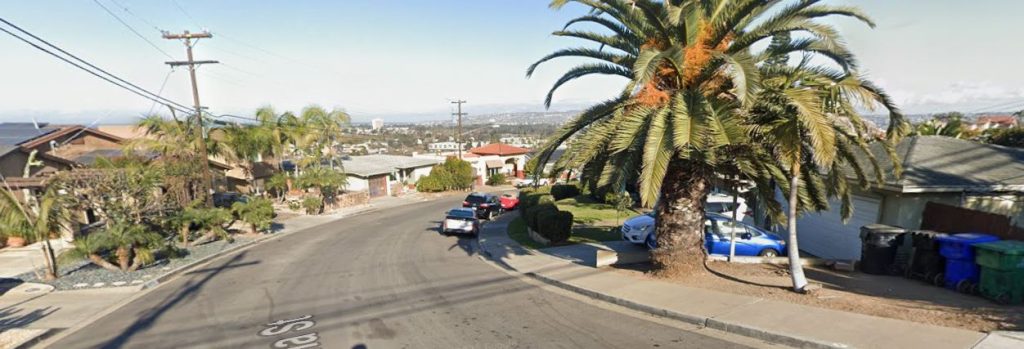
(All photos courtesy of the Ocean Beach Woman’s Club)

The Ocean Beach Woman’s Club is a familiar landmark to many OB residents — a historic building at the corner of Bacon Street and Muir Avenue that has hosted meetings, fundraisers, celebrations and community gatherings for generations.

But the story of the club is about more than a century-old building. It is about the women who kept it alive through changing times, shifting generations and the challenges faced by many longtime civic organizations.

Founded in 1924, the Ocean Beach Woman’s Club recently celebrated its 100th anniversary and continues its mission of community service, friendship and philanthropy with members ranging from their 20s to their 90s. Some of the most interesting chapters in the club’s story are found in the details — the unexpected turns, personal connections and challenges that shaped the organization over the decades.

Here are 10 things behind the Ocean Beach Woman’s Club.

1. The club’s first “home” was a disappearing landmark

When the Ocean Beach Woman’s Club was founded in 1924, members did not have a permanent clubhouse. Early meetings were held in rented locations, including Ocean Beach’s Flatiron Building at Abbott Street and Newport Avenue.

Continue Reading More Than a Century of Making Waves: 10 Things Behind Ocean Beach’s Woman’s Club

The Resistance Against Flock Surveillance Cameras

 Staff  August 6, 2026  16 Comments on The Resistance Against Flock Surveillance Cameras

By Michael Hernandez

You probably know there are programs out there intercepting electronic data to harvest global emails, chats, and browsing histories. And there are governments and agencies collecting our metadata for information including the durations of our calls, communication time stamps, and precise geolocation records. There are facial recognition networks scanning anyone and everyone in public spaces, transit hubs, and protests to match faces against immense biometric databases.

In our world — one that is increasingly resembling the totalitarian superstate of Oceania in George Orwell’s 1984 — these are just a few of the tools being used in the modern day to spy on everyday Americans. Among them in the mass-surveillance toolbox are Automatic License Plate Readers, or ALPRs. ALPRs are cameras set up along roadways, traffic lights, or mounted on police cars that capture images of license plates in real-time, convert them into text and run the images against vehicle databases to find a match.

One of the major providers of ALPR technology is Flock Safety, an American public safety tech and private-police surveillance company.

Founded in 2017 by three alumni from the Georgia Institute of Technology with a stated mission of “shaping the future of safety”, Flock began as a side-project which saw the three co-founders build their first video surveillance cameras by hand around one of the trio’s dining room tables. The trio allegedly began to focus on the project after a Dekalb County detective told one of them their product had assisted police in solving a home break-in. Then that member supposedly called the other two co-founders and told them it was time to quit their jobs.

As of 2026 Flock Safety ALPRs are reportedly being used by over 5,000 law enforcement agencies in 6,000 communities across the U.S. It is estimated flock safety cameras scan more than 20 billion cars nationwide every month. According to Flock itself, roughly 10 percent of reported crimes in the country are solved using their technology, amounting to more than  a purported 700,000 crimes a year.

Flock Safety’s network is made up of cameras, image recognition, and AI machine learning which then shares information with police departments. While advocates tout the technology as an important tool for law enforcement, ALPRs have drawn a heavy amount of backlash from the public, elected officials, and civil liberty groups citing privacy concerns.

Continue Reading The Resistance Against Flock Surveillance Cameras

Port’s Own EIR on TopGolf at Harbor Island Raises Substantive Concerns Over Its Negative Impacts on Environment

 Source  August 5, 2026  2 Comments on Port’s Own EIR on TopGolf at Harbor Island Raises Substantive Concerns Over Its Negative Impacts on Environment

Public Comment on This Use of Public Land Closes After August 24

by Andi Ruiz / Times of San Diego / Aug. 4, 2026

Lights, poles and nets at a proposed waterfront golf and entertainment center could have a negative impact on habitats and native species, according to an environmental analysis of the project.

The concerns are addressed in a draft environmental impact report (EIR) on the redevelopment of East Harbor Island being sought by the Port of San Diego, which would include a Topgolf complex and waterfront park, each covering about 10 acres.

The report cites light pollution and height of the Topgolf poles and nets as notable impacts.

Bright light, according to the analysis, could disrupt the behavior of birds and attract them to nets in the structure, leaving them entangled.

A proposed alternative would limit the Topgolf to one story, as compared to the currently proposed three stories. The planned 108 hitting bays would drop to 34 and the height of the netting poles would fall from 170 feet to 140 feet with the shift to a one-story structure.

Continue Reading Port’s Own EIR on TopGolf at Harbor Island Raises Substantive Concerns Over Its Negative Impacts on Environment

Major oil companies reap massive profits during U.S. and Iran fighting

 Source  August 5, 2026  4 Comments on Major oil companies reap massive profits during U.S. and Iran fighting

By Cathy Bussewitz / Associated Press PBS News / July 31, 2026

American oil and gas giants raked in massive spring profits while fighting between Iran and the U.S. impeded petroleum shipments and consumers around the world paid more for fuel and confronted shortages.

The conflict, now in its sixth month, halted most shipping through the Strait of Hormuz, a narrow waterway that previously served as a delivery route for a fifth of the world’s oil and natural gas. With global supplies constrained, prices for Brent crude, the international standard, soared from about $70 to above $100 a barrel for much of March, April and May, and at one point reached $126.

The money that oil companies accrued between the beginning of April and the end of June could receive extra scrutiny this year. Gasoline, diesel and jet fuel prices climbed sharply during that period, increasing costs for drivers and airline passengers. Supplies ran low in some countries, leading to sporadic fuel rationing in Australia and government office closures in Nepal and Sri Lanka.

Exxon Mobil on Friday reported that its second quarter profits doubled to $14.53 billion, boosted by record diesel production. The oil giant, based in Spring, Texas, brought in $116.02 billion in revenue, up 42%.

Chevron, based in Houston, nearly quadrupled its profits to $12.07 billion and revenue jumped 56% to $70.06 billion.

Six of Europe’s largest oil companies posted combined first-quarter profits of $22 billion, more than 40% higher than last year.

Continue Reading Major oil companies reap massive profits during U.S. and Iran fighting