OB Historical Society: San Diego Reader Stories by OB’s Mercy Baron — Thurs. Jan. 15

 Source  January 14, 2026  1 Comment on OB Historical Society: San Diego Reader Stories by OB’s Mercy Baron — Thurs. Jan. 15

Please join Ocean Beach Historical Society, for A View From My Trike, Thursday evening, January 15, 2026 at 7:00 pm, at Water’s Edge Community, 1894 Sunset Cliffs Blvd.

OBHS Board Member and talented writer Mercy Baron presents an engaging selection of her stories from the San Diego Reader.

This fun and lively presentation will kick off Ocean Beach Historical Society’s 32nd season of free monthly programs.


Continue Reading OB Historical Society: San Diego Reader Stories by OB’s Mercy Baron — Thurs. Jan. 15

Mass Resignations at DOJ Over Refusal to Investigate Ross’ Fatal Shooting of Renee Good But of Intent Instead to Investigate Her Wife

 Source  January 13, 2026  3 Comments on Mass Resignations at DOJ Over Refusal to Investigate Ross’ Fatal Shooting of Renee Good But of Intent Instead to Investigate Her Wife

By Harry Litman / The New Republic / January 13, 2026

The stunning resignations on Monday of four senior career officials from the Criminal Section of the Justice Department’s Civil Rights Division confirm that DOJ has gone profoundly off the rails in its handling of what increasingly appears to be one of the gravest federal excessive-force cases in decades.

The resignations reportedly had multiple causes, but the central one was the sidelining of the Criminal Section from the investigation of the January 7 fatal shooting of Renee Nicole Good by Immigration and Customs Enforcement agent Jonathan Ross.

In any normal, professionally run Department of Justice—Democratic or Republican—a shooting that looks this serious on its face would trigger a searching civil rights investigation by the Criminal Section, the Department’s long-standing unit for prosecuting unlawful uses of force. That has been true whether the assailant was a state officer, as in the Rodney King case, or—more rarely—a federal one, as at Ruby Ridge. (I served in the department during both and worked on the King case.)

ICE has steadfastly maintained that the shooting was justified because Ross reasonably believed that Good was attempting to run him over. But multiple bystander videos and visual analyses have seriously undermined that self-serving account. I put the point in that lawyerly, hedged way because, for present purposes, it is more than enough to establish beyond any cavil that this case demands the most thorough investigation the federal government can muster.

That is the very opposite of what happened here.

Continue Reading Mass Resignations at DOJ Over Refusal to Investigate Ross’ Fatal Shooting of Renee Good But of Intent Instead to Investigate Her Wife

‘Save the whales’ worked for decades, but now gray whales are starving

 Source  January 13, 2026  0 Comments on ‘Save the whales’ worked for decades, but now gray whales are starving

By David HelvargOp-Ed LA Times / Jan. 8, 2026

Recently, while sailing with friends on San Francisco Bay, I enjoyed the sight of harbor porpoises, cormorants, pelicans, seals and sea lions — and then the spouting plume and glistening back of a gray whale that gave me pause. Too many have been seen inside the bay recently.

California’s gray whales have been considered an environmental success story since the passage of the 1972 Marine Mammal Protection Act and 1986’s global ban on commercial whaling. They’re also a major tourist attraction during their annual 12,000-mile round-trip migration between the Arctic and their breeding lagoons in Baja California. In late winter and early spring — when they head back north and are closest to the shoreline, with the moms protecting the calves — they can be viewed not only from whale-watching boats but also from promontories along the California coast including Point Loma in San Diego, Point Lobos in Monterey and Bodega Head and Shelter Cove in Northern California.

In 1972, there were some 10,000 gray whales in the population on the eastern side of the Pacific. Generations of whaling all but eliminated the western population — leaving only about 150 alive today off of East Asia and Russia. Over the four decades following passage of the Marine Mammal Protection Act, the eastern whale numbers grew steadily to 27,000 by 2016, a hopeful story of protection leading to restoration. Then, unexpectedly over the last nine years, the eastern gray whale population has crashed, plummeting by more than half to 12,950, according to a recent report by the National Oceanic and Atmospheric Administration, the lowest numbers since the 1970s.

Today’s changing ocean and Arctic ice conditions linked to fossil-fuel-fired climate change are putting this species again at risk of extinction.

Continue Reading ‘Save the whales’ worked for decades, but now gray whales are starving

Is SANDAG Sharing Confidential Database With ICE?

 Source  January 13, 2026  0 Comments on Is SANDAG Sharing Confidential Database With ICE?

By Gustavo Solis / KPBS / Jan. 12, 2026

Local privacy advocates are raising concerns about an obscure database managed by the San Diego Association of Governments (SANDAG) that might be allowing President Donald Trump’s deportation forces to circumvent state and local immigrant sanctuary laws.

For an annual fee of roughly $200,000 SANDAG grants immigration enforcement agencies, including Customs and Border Protection (CBP), access to the database, which is known as ARJIS.

The database contains information from every law enforcement agency in San Diego County — which includes traffic citations, arrest records, field interviews, a local jail census and some driver license records.

Local police agencies have shared data with their federal counterparts through ARJIS for decades. But now, the Trump administration’s aggressive immigration enforcement tactics are raising new questions about what exactly is being shared with the federal government.

“It is not always great to share data because sometimes you don’t know what the motivations of those people might be,” said Seth Hall, a privacy advocate with the TRUST SD Coalition.

Continue Reading Is SANDAG Sharing Confidential Database With ICE?

Coronado Coffee Company Expands to Point Loma

 Source  January 13, 2026  0 Comments on Coronado Coffee Company Expands to Point Loma

By Jennifer Velez / The Coronado Times / Jan. 10, 2026

For a man who doesn’t drink coffee, Luis Madrid sure knows his beans, and has parlayed that knowledge into a new location for Coronado Coffee Company at 1180 Rosecrans Street, Suite 101, in Point Loma.

Well known around Coronado, Luis actually got his start in the coffee business at age 14, making $5 pushing the Café del Sol coffee cart and setting it up outside the former Bay Books location before school every morning. He then made an additional $5 putting it away after school.

“I gave my mom that money to buy groceries to feed our family, and I was happy to be helping,” he shares. By age 17, he was getting $7 an hour as a barista at the cart. Two years later, the owner Steve was moving and selling the business, so Luis took his entire savings of $22,000 and went all in to buy it and renamed it Café Madrid. Luis has built a reputation for serving delicious coffee, tea, smoothies, acai bowls, and pastries, but more importantly he is known for his connection with his customers. I experienced this firsthand when I moved here eight years ago and I remain loyal for the best mochas on the island and the friendliness he and his staff exude.

Continue Reading Coronado Coffee Company Expands to Point Loma

Everything You Want to Know About the Ocean Beach Community Garden

 Source  January 13, 2026  0 Comments on Everything You Want to Know About the Ocean Beach Community Garden

From Grokipedia

Editordude: Here’s a sampling of what’s available at Grokipedia about the nearly 50-year old OB Community Garden in northeast Ocean Beach.

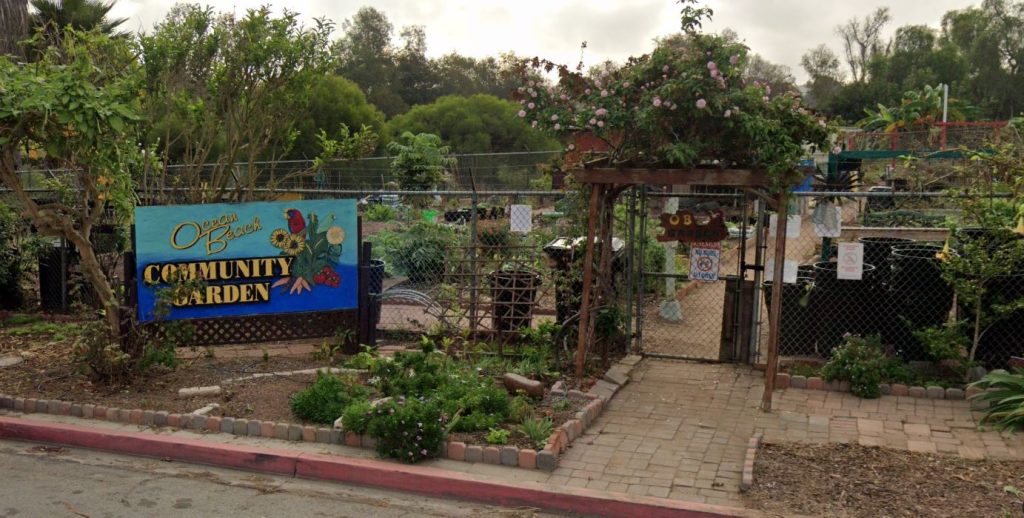
The Ocean Beach Community Garden is located at 2351 Soto Street in the Ocean Beach neighborhood of San Diego, California, ZIP code 92107, situated in a residential area proximate to the Pacific Ocean beaches and local landmarks such as Ocean Beach Pier.[1]

This positioning integrates the garden seamlessly into the coastal community, enhancing accessibility for nearby residents while reflecting the neighborhood’s laid-back, beach-oriented character.[1]

Originally an empty lot acquired in 1978, the site has been transformed into a productive green space spanning approximately one-quarter acre, dedicated to community cultivation.[4] The overall dimensions allow for organized gardening amid the urban coastal setting, with the transformation emphasizing sustainable land use in a formerly underutilized area.[1]

The garden’s layout features 51 individual plots arranged in a grid-like pattern to optimize space and sunlight exposure, complemented by communal pathways for easy navigation and shared green areas for collective use.

Continue Reading Everything You Want to Know About the Ocean Beach Community Garden

OB Planning Board Prioritizes Funding Requests — Including a New Pier, Bike Path Lighting and More

 Source  January 13, 2026  0 Comments on OB Planning Board Prioritizes Funding Requests — Including a New Pier, Bike Path Lighting and More

By Madison Beveridge / Point Loma – OB Monthly SDU-T / January 11, 2026

Funding for a new Ocean Beach Pier, bike path lighting, trash cans and ongoing park and pedestrian issues are among the list of things the Ocean Beach Planning Board would like to see in the city of San Diego’s budget for next fiscal year.

The volunteer advisory group even included San Diego County in the 2026-27 wish list it created during its meeting Jan. 6, calling for funding for what it considers necessities and vital areas of interest in Ocean Beach.

The San Diego City Council intends to vote on the new budget in June. The fiscal year begins July 1.

Much of the Planning Board’s budget request is the same as in previous years, including items such as park maintenance, public space enforcement and pedestrian safety.

Multiple board members voiced concerns about dogs being off leash and who should be enforcing rules against it.

Continue Reading OB Planning Board Prioritizes Funding Requests — Including a New Pier, Bike Path Lighting and More

Reader Rant: An Appeal to Peninsula Community Planning Board — ‘Help. Our Neighbor Developer Is Turning Single-Family Lot into Multi-Family Density’

 Source  January 13, 2026  7 Comments on Reader Rant: An Appeal to Peninsula Community Planning Board — ‘Help. Our Neighbor Developer Is Turning Single-Family Lot into Multi-Family Density’

By Jesse

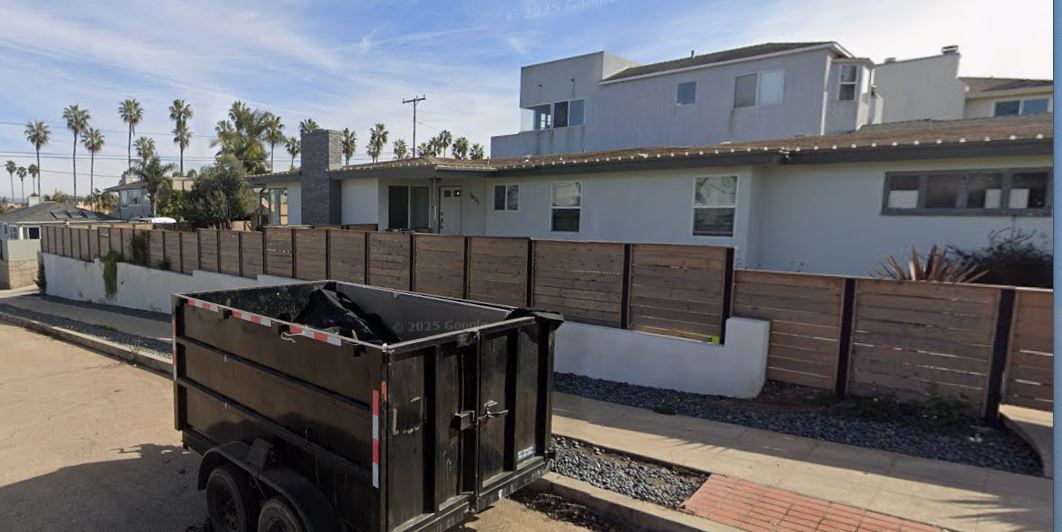
Our neighbor is acting as a de facto developer since he owns the construction company that will be using SB 9 to split a lot in two and build two units on each lot. Turning a single-family lot into multi-family density. This is just outside the Transportation Priority Area so it does not justify increased density. Additionally it is within the Coastal Overlay Zone and Peninsula Community Plan. My dad will be reading the following speech at Thursday’s Peninsula Planning board:

I’m here to ask for your help opposing the proposed coastal development next door to me at 1855 Guizot Street (PRJ-1134704). This project is using the SB 9 lot-split pathway to partially demolish an existing single-family home, split a 0.16-acre lot in two, increase allowable floor area across the new lots, and build two houses, each with an attached ADU, creating four units where one home stands today.

Continue Reading Reader Rant: An Appeal to Peninsula Community Planning Board — ‘Help. Our Neighbor Developer Is Turning Single-Family Lot into Multi-Family Density’

An Open Letter to the San Diego City Council’s Land Use and Housing Committee

 Source  January 12, 2026  12 Comments on An Open Letter to the San Diego City Council’s Land Use and Housing Committee

The Committee to Consider Dumping OB’s Historic District Should Use Current Housing Data Before Making Decision

By South OB Girl

Dear Land Use and Housing Committee Members:

San Diego’s Historic Preservation and Progress Package A will be brought before you by city staff on Wednesday, January 14 for your consideration. However, this package involves controversial proposals regarding preserving the city’s historic housing ideals and districts, yet current housing data is not available. Decisions about San Diego housing should be delayed until the housing data for 2025 has been prepared and analyzed in the forthcoming 2026 Annual Report on Homes.

A report issued once a year based on data from a full year prior does not seem sufficient for assessing the current housing crisis nor sufficient information for
government officials to make decisions about housing moving forward into this year.

This annual reporting seems particularly insufficient given the escalation of public concern and opposition in the past year regarding ADUs, high density projects, plans for resiliency, evacuation route safety, Complete Communities Housing, and Preservation and Progress Package A, among other issues. Given this escalation of public concern in recent years and some of the concern expressed in this letter, now would also be a good time to consider how San Diego’s housing data and building permit data is tracked, managed, and evaluated.

Continue Reading An Open Letter to the San Diego City Council’s Land Use and Housing Committee

Bonus Density Programs Reinforce Historic Segregationist Patterns

 Source  January 12, 2026  9 Comments on Bonus Density Programs Reinforce Historic Segregationist Patterns

By Rob Campbell / Op-Ed SD Union-Tribune / Jan. 9, 2026

“Bonus programs delivering needed local housing,” the Dec. 28 commentary by Colin Parent, presents bonus density programs as a success story but ignores the most critical issue in San Diego’s housing crisis. Who is bearing the burden of these bonus “solutions”? [Parent is head of pro-developers group, Circulate SD.]

While the author characterized San Diego’s bonus housing density programs as an elegant workaround to “political gridlock,” they have created a system that strategically targets low-resource, infrastructure-deficient, historically marginalized neighborhoods while leaving the city’s Whitest, wealthiest, highest-opportunity areas functionally untouched.

Ignoring this reality turns the argument into a one-sided celebration of YIMBY (yes in my backyard) production numbers, which are detached from actual equity outcomes the city is legally and morally obligated to comply with.

A claim that the bonus density programs “apply everywhere” is misleading at best. In practice, these programs overwhelmingly land in communities of color in neighborhoods like Valencia Park, Lincoln Park, Chollas View, City Heights, Logan Heights, etc. These are the very same areas that have higher asthma, cancer, and cardiovascular disease burdens; worse mobility with old, non-ADA compliant pathways (sidewalks); fewer jobs; and long-standing histories of redlining, freeway construction and environmental racism.

Continue Reading Bonus Density Programs Reinforce Historic Segregationist Patterns

Update on San Diego’s Four City Council Races

 Source  January 12, 2026  1 Comment on Update on San Diego’s Four City Council Races

By David Garrick / San Diego Union-Tribune / Jan. 9-11, 2026

Races for two open San Diego City Council seats each feature several strong candidates with no clear frontrunner, but the possible entry into the District 2 race of former Coronado Mayor Richard Bailey could shake things up.

With fundraising in high gear and key endorsements expected in coming weeks, the races appear to still be wide open in District 8 in the South Bay and in District 2, which stretches from Clairemont to Point Loma.

Two other races on the June 2 primary ballot feature incumbents who are expected to comfortably win re-election: Kent Lee in central inland District 6 and Henry Foster in southeastern District 4.

Leading candidates in the District 2 race are Deputy City Attorney Nicole Crosby, former City Hall staffer Josh Coyne and Point Loma neighborhood leader Mandy Havlik.

Continue Reading Update on San Diego’s Four City Council Races