Say Her Name: Renee Good — Executed by ICE January 7, 2026

UPDATED
The woman shot dead by a federal immigration agent in Minneapolis has been identified as Renee Nicole Good, a 37-year-old mother of three who had just moved to the city.

Serving OB, the Peninsula and San Diego Beaches

The woman shot dead by a federal immigration agent in Minneapolis has been identified as Renee Nicole Good, a 37-year-old mother of three who had just moved to the city.
 by Douglas Letter / Time / January 6, 2026
On Jan. 6, 2021, I was in the Chamber of the U.S. House of Representatives as violent insurrectionists attacked our nation’s Capitol, bent on interrupting Congress in carrying out its constitutional responsibilities and doing serious harm to Vice President Pence, Speaker of the House Nancy Pelosi, and members of Congress.
[Please go to original here for all the links]
As I reflect on this dark day for our precious—and often fragile—American democracy, I keep returning to one of the underlying forces helping to fuel the violence: Second Amendment extremism.
Second Amendment extremism comes from what legal scholars describe as the “insurrectionist” interpretation of the Second Amendment. This seriously flawed reading believes that Americans have a right under the Constitution, and even an obligation, to take up arms against the government when they disagree with its direction. At the core of this extremism is the dangerous view that the founders viewed aggrieved citizens who attack the government through armed violence as righteous patriots, rather than the enemies of the state.
 By Farnoush Amiri and Jennifer Peltz / Los Angeles Times / January 6, 2026
The U.N. Security Council held an emergency meeting Monday after an audacious U.S. military operation in Venezuela over the weekend to capture leader Nicolás Maduro, with the United Nations’ top official warning that America may have violated international law.
Before the U.N.’s most powerful body, both allies and adversaries blasted President Trump’s intervention and him signaling the possibility of expanding military action to countries like Colombia and Mexico over drug trafficking accusations. He also reupped his threat to take over the Danish territory of Greenland for the sake of U.S. security interests.
In a statement, U.N. Secretary-General Antonio Guterres said he is “deeply concerned that rules of international law have not been respected with regard to the 3 January military action.”
He added that the “grave” action by the U.S. could set a precedent for how future relations between nations. Denmark, a fellow member of NATO with jurisdiction over the vast mineral-rich island of Greenland, echoed Guterres’ concerns, saying the “inviolability of borders is not up for negotiation.”
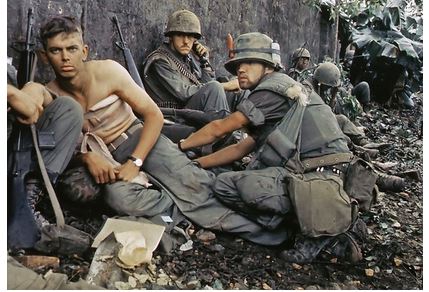 What is the War Powers Resolution? – History and Major Facts
The War Powers Resolution, also known as the War Powers Act of 1973, is a pivotal piece of U.S. federal legislation designed to reassert Congress’s authority in decisions concerning military engagements and to limit the U.S. president’s authority to commit American forces to armed conflict without congressional approval. .
It was passed in the wake of escalating concerns over the U.S. involvement in the Vietnam War and executive overreach in wartime decisions.
Although it became law over President Richard Nixon‘s veto, the resolution has sparked significant legal, political, and constitutional debates since its enactment
Understanding the War Powers Resolution requires exploring its historical context, its legislative framework, and how it has been applied and interpreted in the decades since its passage.
Historical Background
The roots of the War Powers Resolution can be traced back to growing frustration among members of Congress over the U.S. executive branch’s increasing control of military decisions, particularly during the Cold War.
The Vietnam War, which began as a limited U.S. advisory role, escalated into one of the most controversial and protracted military engagements in American history, despite the absence of a formal congressional declaration of war. This set the stage for Congress to take action to reassert its constitutional authority over war powers.
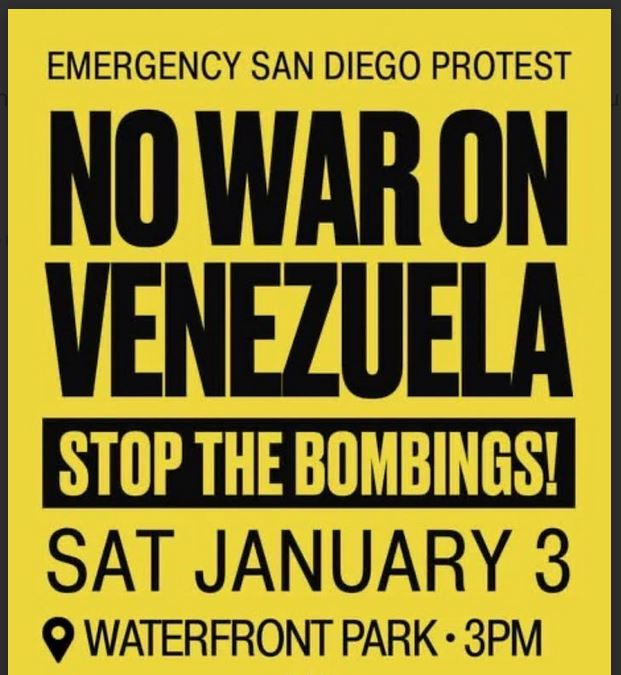 Several “No War on Venezuela” protests are being planned across the country today, after the US conducted a large-scale strike on the city of Caracas and captured Venezuelan President Nicolás Maduro.
“We need to take to the streets and say no to another endless war! The people of this country do not want another war! A U.S. war would cause death and destruction for the people of Venezuela,” the Answer Coalition, one group organizing the protests, wrote in a news release.
Demonstrations are planned for Chicago, New York’s Times Square, outside the White House in Washington, DC, along with city halls and statehouses across the country this afternoon.
 Meanwhile, In Congress
Members of the US Congress on Saturday, Jan. 3, demanded emergency legislative action to prevent the Trump administration from taking further military action in Venezuela after the president threatened a “second wave” of attacks and said the US will control the South American country’s government indefinitely.
Rep. Greg Casar (D-Texas), chair of the Congressional Progressive Caucus (CPC), said that “Congress should vote immediately on a War Powers Resolution to stop” President Donald Trump, whose administration has for months unlawfully bombed boats in international waters and threatened a direct military assault on Venezuela without lawmakers’ approval.
“Trump has no right to take us to war with Venezuela. This is reckless and illegal,” said Casar. “My entire life, politicians have been sending other people’s kids to die in reckless regime change wars. Enough. No new wars.”
 Trump bombs Venezuelan land for first time: Is war imminent?
By Usaid Siddiqui / AlJaseera / Tue, December 30, 2025
United States President Donald Trump said the US carried out a land-based strike on Venezuela on Monday, marking a sharp escalation in Washington’s recent military activity against the South American nation.
Trump said the operation had targeted a docking facility being used to load boats carrying narcotics. Venezuelan authorities, however, have yet to confirm the incident.
Tensions between Washington and Caracas have risen sharply since September, when the Trump administration began a series of strikes on Venezuelan vessels in the Caribbean and eastern Pacific, which the US government claims are trafficking drugs.
However, despite aerial strikes on more than two dozen boats, which have killed at least 100 people, the US has presented no evidence of drug trafficking.
More recently, US forces have seized Venezuelan oil tankers, which it claims are carrying sanctioned oil and ordered a naval blockade on all sanctioned oil tankers near the coast.
Caracas has long accused Washington of using allegations of drug trafficking as a pretext for forcing regime change in Venezuela, raising renewed concerns about the legality of such actions and the risk of a broader conflict. Indeed, legal experts say the targeting of vessels in international waters likely violates US and international law and amounts to extrajudicial executions.
 Any talk of a quick invasion and easy ‘regime change’ is dangerously misleading.
By Mark Hertling / The Bulwark – Reader Supported News / Nov 13, 2025
OVER THE PAST FEW MONTHS, the United States has embarked on a controversial maritime campaign in the Caribbean Sea and Eastern Pacific targeting small Venezuelan and Colombian vessels alleged to be engaged in drug smuggling. Under an asserted “narcoterrorist” deterrence operation, the United States has thus far carried out nineteen twenty lethal strikes on small boats in international waters, killing at least seventy-six people, all undertaken without the transparency, oversight, or legal foundation that normally governs the use of American force.
The Trump administration insists these are long-needed and decisive counternarcotics operations. But U.N. human-rights experts warn that the strikes may “amount[] to extrajudicial executions,” and allies with territory and citizens in the Caribbean are raising alarms about legal exposure, civilian risk, and regional instability. With the USS Gerald R. Ford carrier strike group near to arriving on station and President Trump threatening “hundreds more” strikes, the mission looks less like enhanced interdiction and far more like the early shaping operations for regime-change in Venezuela.
 President Donald Trump hosted a “Great Gatsby”-themed Halloween party just hours before millions of Americans lost their Supplemental Nutrition Assistance Program (SNAP) benefits.
This party was hosted by the president in the midst of and during the longest shutdown of the federal government.

The Friday night fête at Mar-a-Lago was themed “A little party never killed nobody,” according to the White House, referencing the song from the 2013 film adaptation of the F. Scott Fitzgerald novel.

 The Trump administration’s murderous strikes on small boats at sea constitute unlawful extrajudicial killings.
By Marjorie Cohn / Truthout / October 30, 2025
As the Trump administration continues to murder people in small boats on the high seas and mounts the largest U.S. military buildup in decades in the Caribbean, it is moving inexorably toward an all-out, illegal attack and forcible regime change in Venezuela.
Despite Team Trump’s feeble attempts to legally justify its ocean strikes, which have now killed 57 people since early September, those extrajudicial killings are also unlawful.
Donald Trump’s murderous campaign came into focus on February 20, when the State Department designated eight drug trafficking organizations, including Tren de Aragua, as foreign terrorist organizations. Although the administration has attempted — so far unsuccessfully — to use that designation to justify sending immigrants to a notorious prison in El Salvador, Trump is now invoking it in an effort to validate his illegal strikes at sea.
Moreover, on March 15, Trump issued “A Proclamation,” alleging that Tren de Aragua has been engaged, in association with Venezuelan President Nicolás Maduro, in “irregular warfare” in the United States, with no explanation of what is meant by irregular warfare. But on February 26, most U.S. intelligence agencies had made a finding that Tren de Aragua was neither controlled by the Venezuelan government, nor was it committing crimes in the United States on its orders.
 By Jackie Calmes / Los Angeles Times / Aug. 28, 2025
“I am not a crook,” President Nixon said in 1973.
“I’m not a dictator,” President Trump insisted on Monday.
And with that, another famously false presidential proclamation entered the annals of memorable statements no president should ever feel compelled to make.
[Please go to original for links]
It took months more for Nixon’s crimes to force him to resign in 1974 ahead of his all-but-certain removal by Congress. But a half-century later, Trump is unabashedly showing every day that he really does aspire to be a dictator. Unlike Nixon, he doesn’t have to fear a supposedly coequal Congress: It’s run by slavish fellow Republicans who’ve forfeited their constitutional powers over spending, tariffs, appointments and more. Lower courts have checked Trump’s lawlessness, but a too-deferential Supreme Court gets the last word and empowers him more than not.
Americans are indeed in proverbial uncharted waters. Four months ago, conservative columnist David Brooks of the New York Times wrote — uncharacteristically for a self-described “mild” guy — “It’s time for a comprehensive national civic uprising.” It’s now past time.
 If Trump is taking tactical advice from Putin about how to hold an election, that doesn’t bode well for the future of American democracy.
This is an adapted excerpt from the Aug. 18 episode of “The Rachel Maddow Show.”
By Rachel Maddow / MSNBC / Aug. 19, 2025
On Monday, dozens of people turned up in Austin, Texas, to cheer on Democrats as they returned to the state amid a huge national fight over redistricting.
Texas has been at the center of an extraordinary demand by Donald Trump that Republican-controlled states, like Texas, draw new congressional maps and effectively guarantee GOP control of Congress for years to come.
It’s not just Texas. Vice President JD Vance flew to Indiana earlier this month to put pressure on the Republican governor there to alter that state’s maps for the Republicans. Politico reported that the White House has been in talks with Republicans in Missouri, New Hampshire, South Carolina and Florida to change their congressional maps as well.
That’s one way Trump’s trying to rig the midterms – by demanding changes to congressional district maps to make it structurally impossible for Democrats to control Congress again.
 By Andrew Solender / Axios / July 7, 2025
At town halls in their districts and in one-on-one meetings with constituents and activists, Democratic members of Congress are facing a growing thrum of demands to break the rules, fight dirty — and not be afraid to get hurt.
Why it matters: House Democrats told Axios they see a growing anger among their base that has, in some cases, morphed into a disregard for American institutions, political traditions and even the rule of law.
“This idea that we’re going to save every norm and that we’re not going to play [Republicans’] game … I don’t think that’s resonating with voters anymore,” said one House Democrat.
Another told Axios that a “sense of fear and despair and anger” among voters “puts us in a different position where … we can’t keep following norms of decorum.”
Axios spoke to more than two dozen House Democrats for this story, with many requesting anonymity to offer candid insights about their interactions with constituents and activists.
Say Keep it goin' to the OB Rag
with your donation today!




Recent Comments